


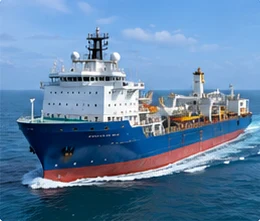
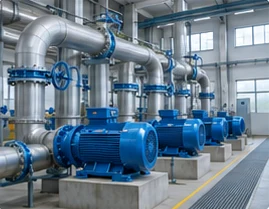

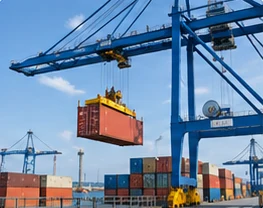
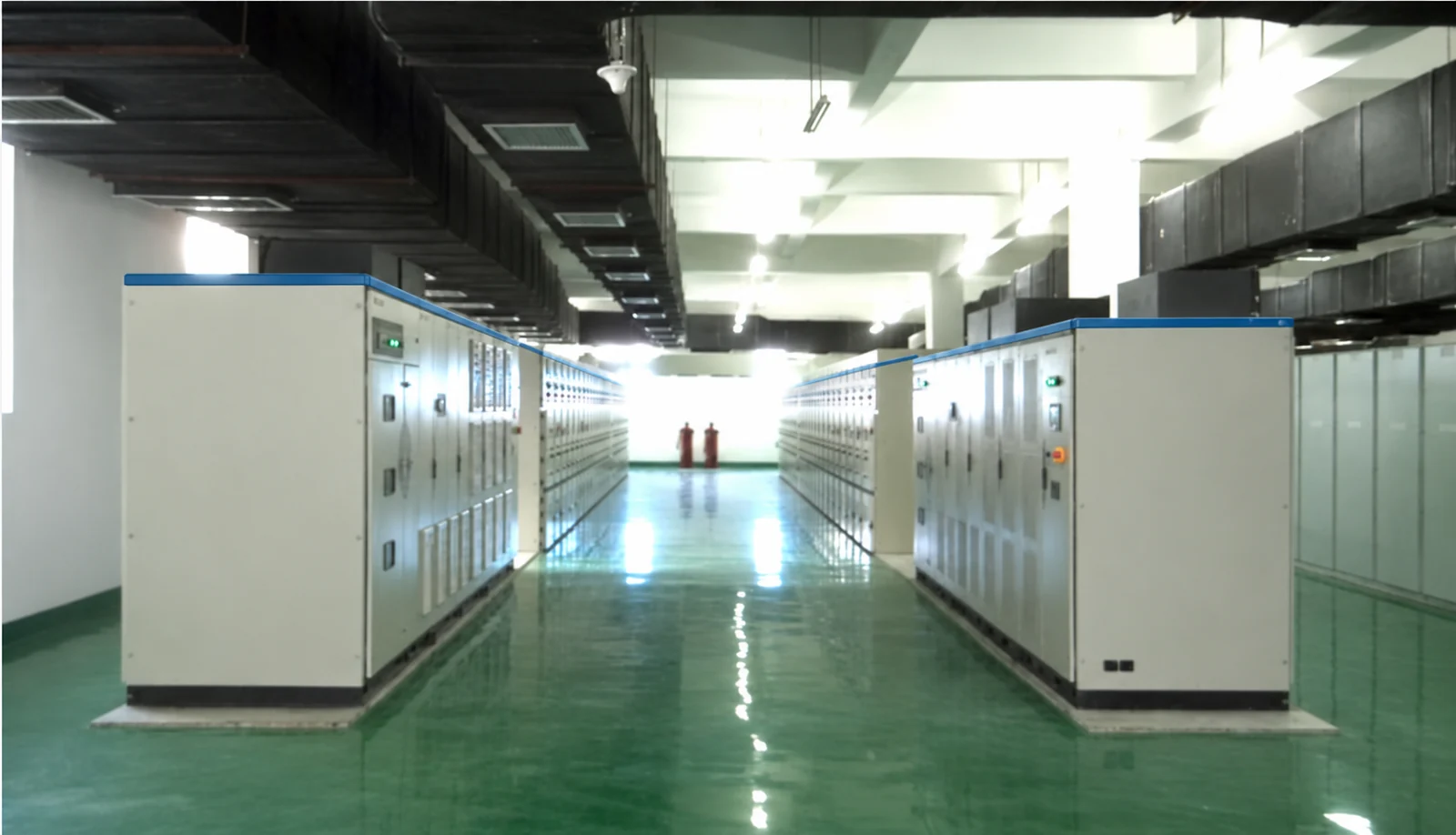
← MAX-MV series overview · Explore all 10 selection guides
01 · Product overview
From a motor enquiry to an agreed drive package.
MAX-MV is supplied as an engineered medium-voltage drive system around the motor, application and installation. INOMAX can discuss the transformer, power stage, control, cooling, bypass and documentation with the parties responsible for the complete project.
A pump or compressor OEM needs a repeatable interface and a package that fits its equipment. An EPC needs an auditable technical scope and approval schedule. A distributor or integrator needs a practical path for selection, commissioning and local support. The cooperation plan should identify these responsibilities before the order is finalized.
02 · Rating and cabinet selection
Power, voltage and current selection
Match the motor nameplate current, overload duty and site derating before confirming a model. The filters below help you compare the listed selections; final cabinet and option details are agreed for the project.
7 reference selections
No matching selection in this table. Send your motor data for engineering review.
Dimensions exclude top fans, bypass additions and service clearances. At 6.6 kV from 2,800 kW and 11 kV from 4,500 kW, add an 800 mm current-limiting cabinet with matching depth and height. Use the approved project drawing for the complete installation.
03 · Application fit
Application requirements that shape the package
Equipment manufacturers
Pump, fan, compressor and industrial-machinery packages. Develop a motor-duty specification, control interface and repeatable acceptance process.
EPCs and project integrators
New plants and modernization projects. Coordinate technical compliance, scope boundaries, drawings, protection and delivery milestones.
Distributors and service partners
Local-market development and project support. Discuss application capability, training, commissioning arrangements and spare-parts planning.
04 · Integration and options
Functions, accessories and engineering decisions
Begin with a minimum useful enquiry
A motor nameplate, application, supply voltage and expected operating duty are enough to start a technical discussion. The next step is a structured data review covering environment, controls, continuity, cooling and installation constraints.
Agree a responsibility matrix
State who supplies upstream switchgear, cabling, cooling equipment, sensors, site installation, testing and commissioning. Clarify document ownership, local regulatory requirements and the division between drive protection and machine/process protection.
Use document milestones to protect delivery
Plan technical agreement, general-arrangement approval, interface approval, test-plan approval, manufacture, factory acceptance and shipping release. The schedule should show which customer inputs and approvals affect production.
Plan service before equipment shipment
Define remote and on-site support, commissioning prerequisites, operator training, fault-data collection and spare-parts scope. Warranty duration, start date, exclusions and service responsibilities belong in the quotation and contract for the selected project.
Define the equipment scope
| Configuration item | What to agree |
|---|---|
| Motor control and feedback | Motor technology, control mode and encoder interface where required |
| Bypass / isolation | Manual or automatic line bypass, isolation and switching interlocks; selected for the process |
| Control integration | Standard Modbus RTU / I/O; optional PROFIBUS DP or exact TCP/IP arrangement |
| Continuity options | Cell-bypass strategy, controller redundancy or standby drive as project-selected |
| Service package | Spare cells, fans, boards, commissioning and training scope |
05 · Electrical performance
Performance for a defined operating duty
| Performance item | Selection basis |
|---|---|
| Motor-control modes | V/F; V/F with feedback; sensorless vector; closed-loop vector |
| Overload capability | 120% for 120 s; 150% for 5 s, checked against selected configuration and duty |
| Frequency resolution | 0.01 Hz; resolution is distinct from motor-speed accuracy |
| Acceleration / deceleration | 0.1–3,600 s; set within motor and process limits |
| Inverter efficiency | 98.5%; excludes the phase-shifting transformer |
| Power factor | ≥0.96 at the specified operating conditions |
| Harmonic performance | THD ≤4% for 3–4.16 kV; ≤2% for 6–13.8 kV. Confirm measurement point, loading and network conditions. |
Confirm performance at the required motor duty, supply conditions and cooling arrangement. For regenerative or braking loads, specify the operating cycle so a suitable two- or four-quadrant power stage can be selected.
06 · Technical data
Installation, environment and maintenance
| Item | Requirement / configuration |
|---|---|
| Operating temperature | −10 to +40°C; higher temperature requires an approved cooling and derating plan |
| Humidity | 20–90% RH, non-condensing, as the installation basis; confirm higher-humidity configurations |
| Altitude | Provide the site elevation; above 1,000 m, review insulation, cooling and derating for the selected configuration |
| Storage | −40 to +70°C; dry, protected storage without condensation or outdoor exposure |
| Cooling and enclosure | Forced air or water cooling; IP31 standard, IP42 optional, custom IP54 |
| Control supply | 220 V AC, 3 kVA, 50/60 Hz; optional DC supply by project arrangement |
| Control interfaces | 3 analog inputs / 4 analog outputs; 8 digital inputs / 5 digital outputs; RS485 / Modbus RTU standard |
| Installation | Indoor electrical room; no explosive/corrosive gases, conductive dust or oil mist; keep cooling and service access clear |
Plan safe service access, delivery openings, foundation loading and separate power/control cable routes. Inspection intervals and replacement work follow the installed equipment manual and the site maintenance plan.
07 · Supplier and configuration comparison
Compare complete proposals on the same basis
| Comparison point | What to check |
|---|---|
| Technical offer | Equivalent motor duty, configuration, options and applicable project requirements. |
| Delivery offer | Defined approval milestones, FAT, shipping terms and commissioning dependencies. |
| Support offer | Named responsibilities for remote support, site work, training and spare parts. |
| Partnership offer | Agreed territory/project scope, capability development and commercial terms. |
Ask each supplier to identify inclusions, exclusions and deviations. The selected rating, options, installation work, acceptance test and service responsibilities should be clear before comparing the final price.
08 · Customer applications
Relevant industrial project experience
OEM compressor integration
Xi’an Shaangu Power
The Yili Chuanning MVR project selected a 10 kV, 8,000 kW MAX-MV drive through the compressor project. It illustrates the importance of coordinating the drive with the equipment package.
Industrial utility integration
Jinling Petrochemical
The incinerator induced-draft fan application used 10 kV, 630 kW MAX-MV selections, with site commissioning recorded for the installed equipment.
Discuss a comparable configuration with INOMAX. The motor, equipment scope and operating conditions are assessed separately for each project.
Practical project FAQ
Questions to resolve before ordering
6 questions
Can INOMAX supply a drive package under our OEM project specification?
INOMAX can review an OEM specification and define a suitable MAX-MV configuration. Provide the motor and load data, operating sequence, interface requirements, enclosure and cooling conditions. Custom branding, special construction or repeated package arrangements are agreed separately in the technical and commercial scope.
Can you support an EPC tender before the purchase order?
Technical selection and the required proposal documents can be discussed at the enquiry stage. Share the datasheet, applicable specifications, scope split and submission deadline. Identify mandatory requirements and any deviations clearly so the offer can be evaluated on the correct basis.
What documents should be requested with the equipment?
Agree the equipment datasheet, general-arrangement and terminal drawings, single-line/control diagrams, I/O and communication schedules, installation requirements, test records, manuals and spare-parts list. Certificates must identify the equipment and scope actually covered.
Can our customer witness factory acceptance testing?
Witness arrangements can be included in the project agreement. Define the test procedure, acceptance criteria, notice period and required records before manufacture. The test setup and load conditions should be documented so the results can be interpreted correctly.
What is the MAX-MV production lead time and warranty?
Both are stated in the project quotation and contract. Lead time depends on rating, options, drawings, material readiness and testing requirements. Confirm the warranty duration, start date, coverage and overseas service responsibilities for the selected equipment rather than applying terms from another product series.
How can we become a MAX-MV distributor or integration partner?
Introduce your market, industries served, technical team and current project pipeline. Discuss selection support, training, commissioning capability and a practical spare-parts plan with INOMAX. Territory arrangements, exclusivity and commercial support are agreed individually; they are not automatic commitments.
No matching question. Ask our application team.
Technical resources
Catalog, manual & project support
MAX-MV catalog
Ratings, dimensions, features and configuration options.
MAX-MV user manual
Installation, operation, control settings and maintenance.
Project-specific documents
Contact INOMAX for project records, drawings, certificates and test reports matched to your application.
09 · Start the conversation
Let’s define your next MAX-MV project.
Discuss an OEM or EPC Project
Tell us your role, market and application. We will help define the next technical step and the cooperation scope.
Email: info@inomaxtechnology.com
Build your local MAX-MV business
Discuss the industries you serve, application-engineering support, training, commissioning and spare-parts planning. Commercial and service arrangements are defined for your market and projects.


