



ACS890 / Air vs liquid cooling
Cooling is a system-design decision
Choose the cooling arrangement that fits the installation, then confirm the electrical rating. ACS890 offers air- and liquid-cooled platforms with different frame, voltage and current coverage.
Air-cooled and liquid-cooled drives solve the same power-conversion duty using different heat-rejection arrangements. Air cooling requires an appropriate ventilation path and a cabinet environment compatible with the drive. Liquid cooling transfers much of the power-stage heat to a coolant circuit, while control equipment, connections and auxiliary components can still release heat inside the enclosure.
Liquid cooling can be attractive where cabinet heat or installation space is a major constraint, but it adds piping, heat-exchange equipment and a maintenance interface. A smaller power module does not automatically mean a smaller complete installation; include the cooling equipment and the space needed for service.
A replacement project should compare the entire thermal design. Switching an existing air-cooled cabinet to liquid cooling is not simply a module swap. Cooling capacity, coolant quality, flow and temperature limits, condensation prevention, monitoring and failure response need to be defined for the selected assembly.
Air-cooled installation
Provide the specified clearances, airflow and ambient conditions. Plan access for cleaning and fan-related maintenance.
Liquid-cooled installation
Define the cooling circuit, connections, monitoring and heat exchanger as part of the drive package. Obtain model-specific coolant requirements before piping design.
Residual cabinet heat
Review busbars, control units and auxiliary loads as well as the main power-stage losses. Surface-cooler output and motor-drive output are different ratings.
System configuration
Define the power path and supporting equipment.
Functional configuration guide, not an installation wiring diagram. Final protection, connections and component compatibility follow the engineered system documentation.
| Selection point | Configuration / option | Engineering consideration |
|---|---|---|
| Heat rejection | Cabinet ventilation / air path | Engineered coolant circuit plus residual cabinet cooling |
| Infrastructure | Suitable ambient air and required clearances | Coolant supply or heat exchanger, piping and monitoring |
| Service planning | Cleaning, airflow inspection and fan access | Connection access, coolant maintenance and leak / flow response |
| Listed inverter coverage | 400 V and 700 V AC classes | 400 / 700 / 900 / 1140 V classes; 3.3 kV cabinet configuration by project |
| Retrofit assessment | Check the existing enclosure and ventilation | Review both the electrical assembly and new thermal interfaces |
Selection data
Cooling comparison at representative ratings
| Model | Class / cooling | PN (kW) | Continuous current | LD kW / A | HD kW / A | W × D × H (mm) / weight |
|---|---|---|---|---|---|---|
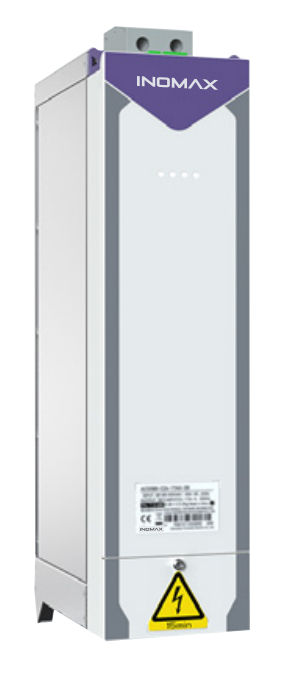
| ACS890-R84-0915-4 | 400 V AC / Air | 500 | 915 IN (A) | 500 / 868 | 450 / 731 | 170×585×980 / 73.0 kg |
| ACS890-L72-0915-4 | 400 V AC / Liquid | 500 | 915 IN (A) | 500 / 868 | 450 / 731 | 170×510×930 / 55.0 kg |
| ACS890-R89-0590-7 | 700 V AC / Air | 560 | 590 IN (A) | 560 / 572 | 500 / 513 | 170×585×980 / 75.0 kg |
| ACS890-L75-0590-7 | 700 V AC / Liquid | 560 | 590 IN (A) | 560 / 572 | 500 / 513 | 170×510×930 / 55.0 kg |
| ACS890-L78-0780-7 | 700 V AC / Liquid | 800 | 780 IN (A) | 800 / 757 | 710 / 679 | 170×510×930 / 55.0 kg |
| ACS890-T98-0950-11 | 1140 V AC / Liquid | 1500 | 950 IN (A) | 1500 / 921 | 1200 / 712 | 240×630×1260 / 130.0 kg |
Read the current correctly: inverter values are motor IN; AFE values are AC / DC currents. LD and HD cells show the catalog power / current references. Continuous ratings use the catalog conditions; where specified, LD is 110% for 1 minute in 5 and HD is 150% for 1 minute in 5. Apply ambient, installation and topology-specific derating. Dimensions are for modules, not complete cabinets.
Accessories & integration
Specify the complete system package.
| Component / option | Role and selection requirement |
|---|---|
| R8 drawer mounting kit | Installation and servicing option for the applicable air-cooled frame. |
| L7 quick-connection kit | Frame-specific connection option for the applicable liquid-cooled assembly. |
| BL90 / reactor bases | Wheeled installation base and specified current-sharing reactor base options. |
| PL96-LA / PL9A-LA | Air-to-water parallel-reactor options for the stated compatible frames, where required. |
| WAE2000 / WAE4000 | Catalog surface coolers rated 2000 W / 4000 W. These auxiliary heat-removal ratings are not motor-drive output power. |
| Temperature and auxiliary I/O | Select the supported motor / system temperature interfaces and I/O needed for the protection logic. |
| CP68 / service connections | Operator access and physical service arrangements coordinated with the cabinet design. |
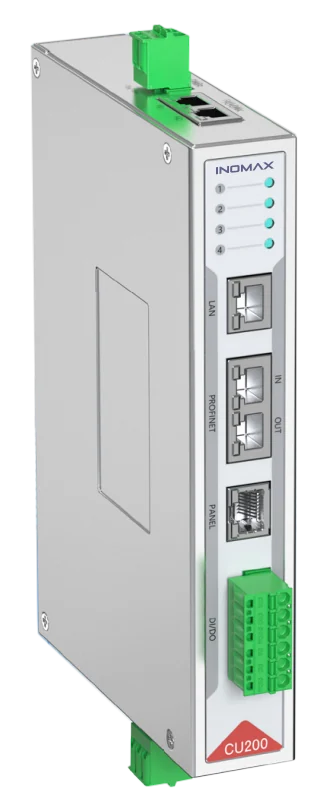
Control, feedback and power must match.
Include the PLC interface, encoder, operator panel, auxiliary supply, precharge and installation hardware in the quotation. Availability and compatibility depend on the selected module and cabinet configuration.
Application engineering
Match the configuration to the duty.
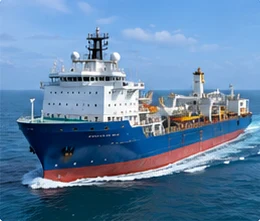
Marine and enclosed machinery spaces
Liquid-cooled assemblies may help manage local heat, subject to the available cooling plant and approval requirements.
Industrial rooms with suitable ventilation
Air-cooled frames offer a direct integration path when the environment and thermal design are appropriate.
Tunnel boring and high-power test equipment
Compare the complete cooling package, service access and repeated-duty thermal load before choosing the frame.
Product FAQ
Questions about air vs liquid cooling.
Which ACS890 voltage classes offer both cooling methods?
The catalog lists both air- and liquid-cooled inverter choices for 400 V and 700 V AC classes. Its 900 V and 1140 V three-level inverter entries are liquid-cooled.
Is liquid cooling always more efficient?
Do not assume a universal system-efficiency advantage. Compare actual converter losses together with the power used by fans, pumps and heat-exchange equipment at the expected operating points.
Can I use ordinary tap water?
Do not specify a coolant without the selected hardware requirements. Obtain the permitted coolant composition, quality, temperature, pressure and flow information for the final module and cooling assembly.
Does a liquid-cooled cabinet still need air circulation?
It can still have residual heat from controls, connections, busbars and other auxiliary components. The cabinet thermal review must account for these losses separately from the liquid-cooled power stage.
Can an air-cooled drive be replaced with liquid cooling?
Yes, it can be evaluated as a retrofit project, but it requires review of electrical ratings, cabinet layout, coolant connections, heat rejection, monitoring and maintenance. It is not an automatic mechanical interchange.
What do the WAE2000 and WAE4000 ratings mean?
They are auxiliary surface-cooler ratings of 2000 W and 4000 W. They do not indicate the motor power of the VFD and are not a substitute for a complete heat-loss calculation.
Which cooling information should be sent for selection?
Provide ambient conditions, cabinet location and size, available air or liquid cooling, installation restrictions, duty cycle and maintenance preferences. For an existing cooling circuit, include its confirmed operating conditions.
Does cooling choice affect delivery or warranty?
Cooling equipment and cabinet engineering affect the confirmed production schedule. INOMAX’s standard two-year warranty is defined in the order; the selected hardware’s installation, operation and maintenance conditions also apply.
Engineering enquiry
Request the right configuration.
Motor/drive ratings; ambient conditions; cabinet space; available ventilation or coolant system; duty cycle; maintenance access; existing cooling data.
info@inomaxtechnology.com
Talk to INOMAX on WhatsApp →
Include your company and the page topic in the message. Manuals, drawings and certificates are supplied for the selected configuration.


