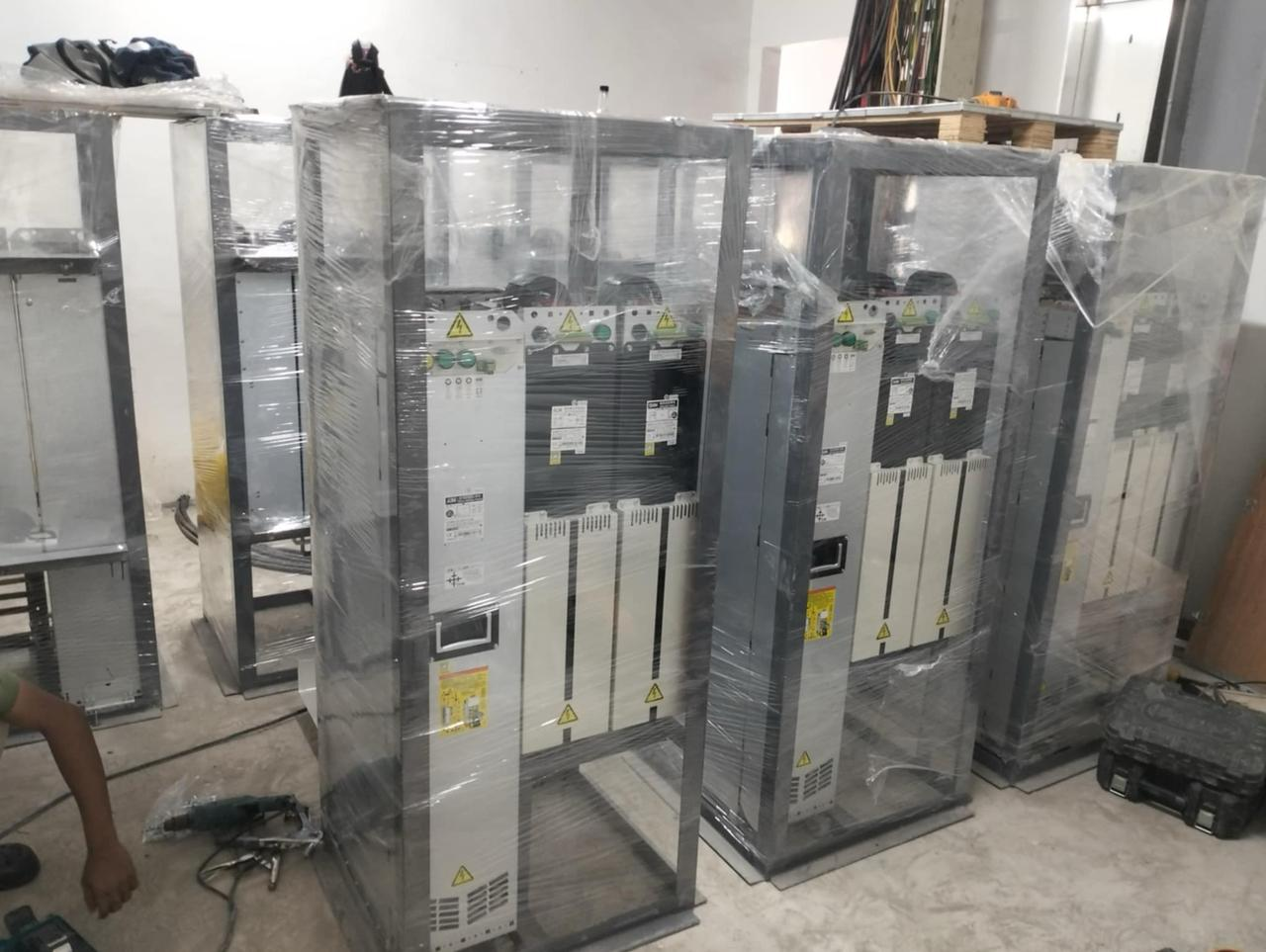
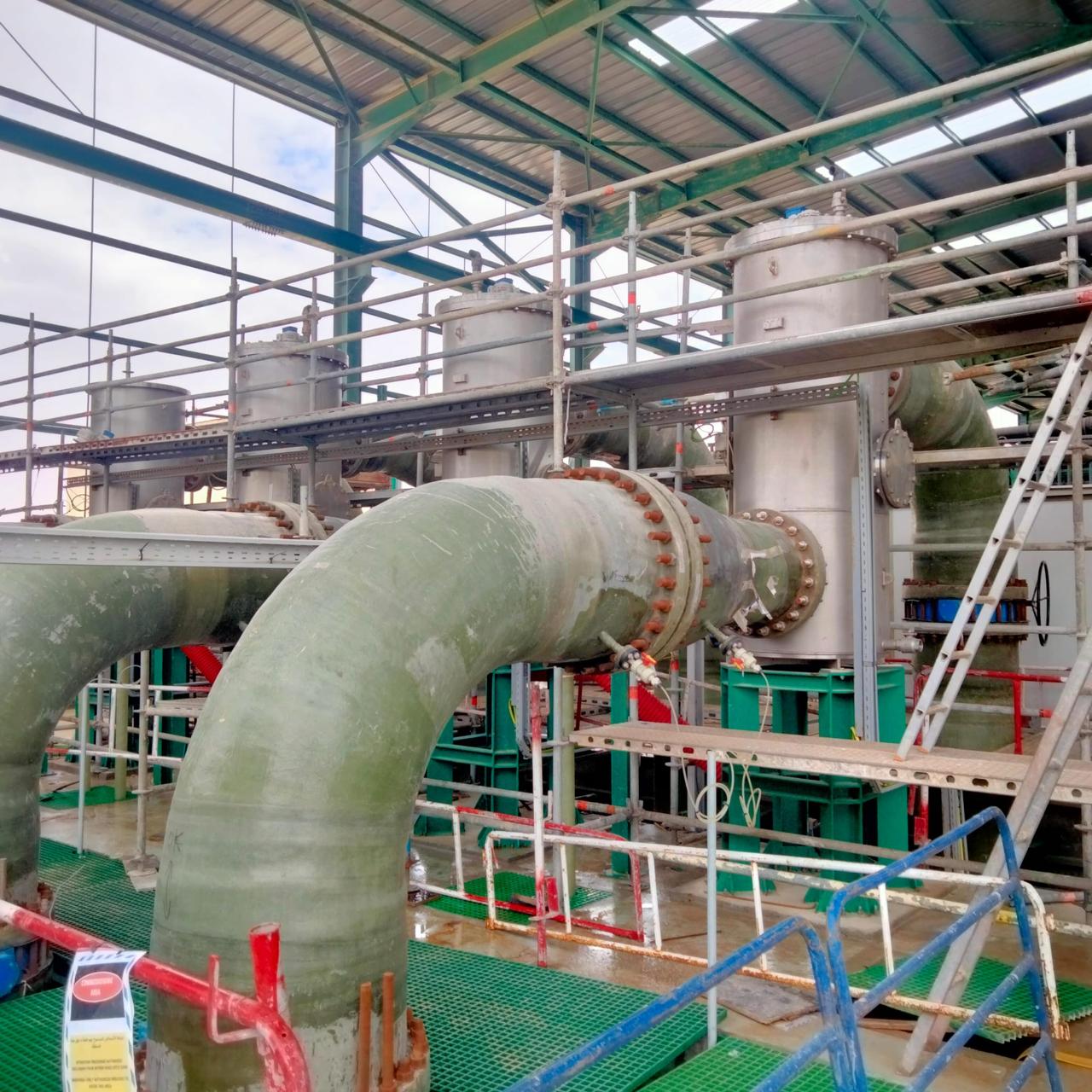
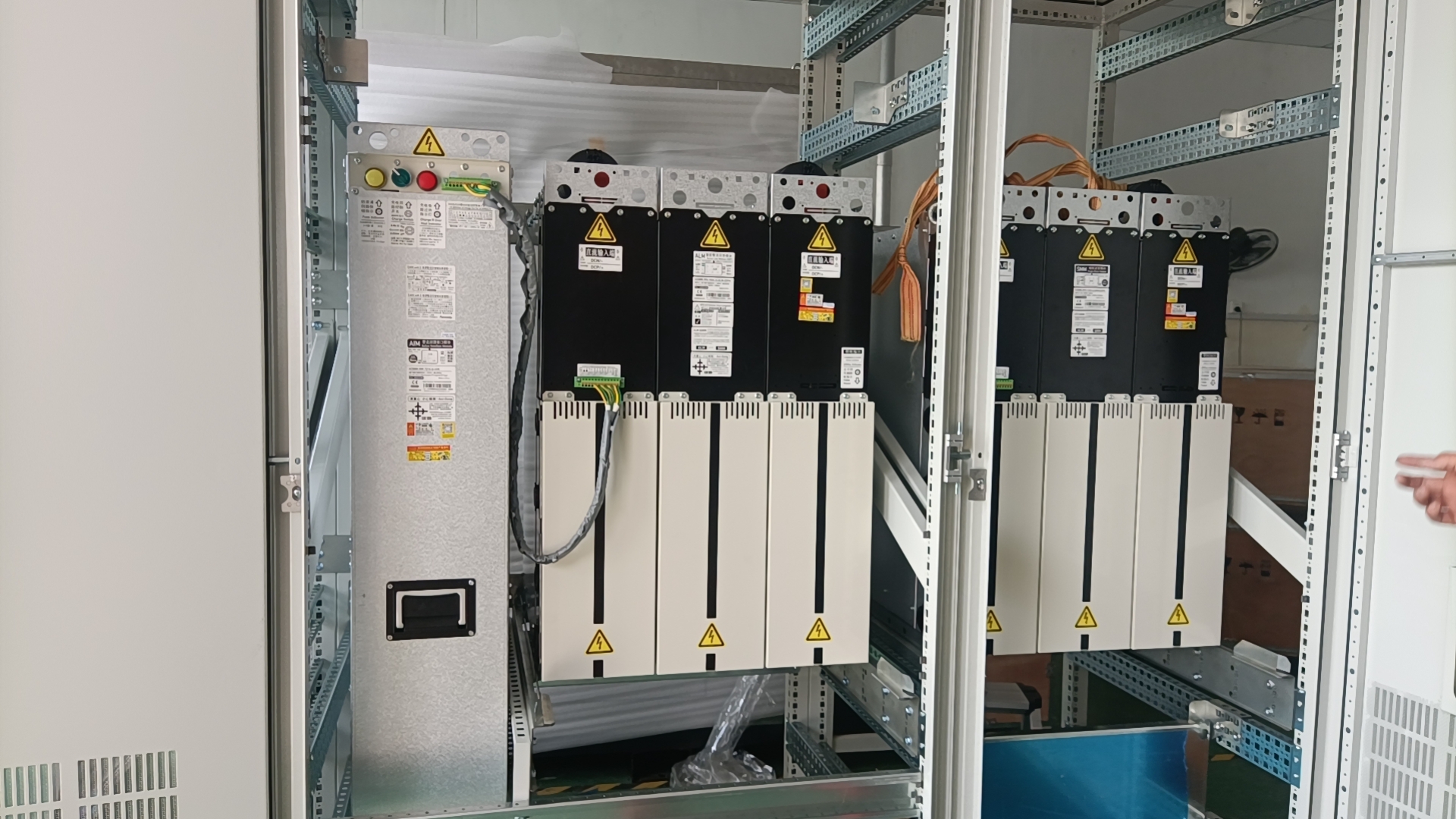
INOMAX ACS580 & ACS880 Seawater Desalination Solutions
High-Performance Variable Frequency Drives for SWRO, MED, MSF and Desalination Plants Worldwide
Overview
Seawater desalination is one of the most critical technologies addressing global water scarcity. With electricity accounting for up to 50% of the operational costs of a desalination plant, energy efficiency and life cycle cost optimization are critical challenges for utilities and developers worldwide. According to the International Desalination Association, over 20,000 desalination plants operate globally, producing more than 100 million cubic meters of fresh water daily — and this capacity continues to grow at 5-8% annually.
At Inomax Technology, our ACS580 and ACS880 variable frequency drives are engineered specifically for the demanding requirements of seawater desalination applications. From low-pressure feed pumps and high-pressure reverse osmosis pumps to energy recovery systems and auxiliary equipment, our drives deliver the precision, efficiency, and reliability that modern desalination plants demand.
Which INOMAX drive is right for your desalination application?
| Desalination Application | Recommended Series | Key Features |
|---|---|---|
| Low-pressure feed pumps, booster pumps, backwash pumps (0.75 kW – 500 kW) | ACS580 | Cost‑effective, sensorless vector control, built‑in PID, multi‑pump control, Modbus RTU standard |
| High-pressure reverse osmosis (RO) pumps (55 kW – 6,000 kW) | ACS880 | Direct Torque Control (DTC), regenerative AFE option (<5% THDi), 200% overload capacity, integrated PLC |
| Energy recovery system (ERS) drives | ACS880 AFE | Four‑quadrant regenerative operation, unity power factor, >95% energy recovery |
| Intake pumps, transfer pumps, chemical dosing pumps | ACS580 | Cost‑effective, easy commissioning, IP55 option for harsh environments |
| Large multi‑train desalination plants | ACS880 multidrive | Common DC bus, energy sharing, reduced footprint, up to 50 MW |
The Desalination Challenge: Energy Efficiency & Power Quality
Energy Consumption — The Single Largest Operating Cost
Seawater reverse osmosis (SWRO) is the dominant desalination technology worldwide, accounting for approximately 65% of installed capacity. However, SWRO is energy‑intensive: typical specific energy consumption ranges from 3.5 to 4.5 kWh per cubic meter of fresh water produced. For a large plant producing 200,000 m³/day, annual energy costs can exceed $30 million.
The high‑pressure pump — the heart of any SWRO plant — consumes 70–80% of total electrical energy. Variable frequency drives (VFDs) control the pump motor speed to maintain optimal transmembrane pressure, reducing energy consumption by 15–30% compared to fixed‑speed operation with throttling valves.
Harmonic Distortion — The Hidden Problem
Desalination plants typically employ dozens or even hundreds of VFDs. Without proper harmonic mitigation, total harmonic distortion (THD) can exceed 30–40%, causing overheating of motors, transformers and conductors, nuisance tripping of breakers and protective devices, premature failure of sensitive instrumentation and control equipment, reduced overall system efficiency, and violation of IEEE 519 and local utility power quality requirements.
How INOMAX ACS580 & ACS880 Solve Desalination Challenges
Ultra‑Low Harmonic AFE Technology — Standard on ACS880
Our ACS880 Active Front End (AFE) drives use IGBT‑based active rectification instead of passive diodes, shaping the input current waveform to be sinusoidal and in phase with the voltage. The result:
-
Total Harmonic Distortion (THDi) <5% — meets IEEE 519 without external filters
-
Unity power factor (>0.99) — eliminates utility penalties and maximizes transformer utilization
-
Regenerative braking — returns >95% of braking energy to the grid during pump deceleration
-
Constant DC bus voltage — immune to grid voltage fluctuations common in remote coastal locations
For plants requiring the highest harmonic performance, our AFE drives can achieve THDi <3% at 80–100% load — exceeding the most stringent utility requirements.
Direct Torque Control (DTC) — Precision Under Pressure
ACS880 DTC technology updates the motor model 40,000 times per second, delivering:
-
<5 ms torque response — essential for maintaining stable RO membrane pressure during feedwater TDS fluctuations
-
Full torque at zero speed — eliminates the need for mechanical brakes on large pumps
-
±0.1% speed accuracy (open loop) — precise pressure control without an encoder
-
±0.01% speed accuracy (closed loop) — with optional encoder for the most demanding applications
For ACS580, our advanced sensorless vector control delivers 150% starting torque at 0.5 Hz and ±0.5% speed accuracy — more than adequate for most desalination pump applications.
Energy Recovery Integration — Maximizing Efficiency
Modern SWRO plants incorporate energy recovery devices (ERDs) such as pressure exchangers or turbochargers that capture hydraulic energy from the high‑pressure brine stream. The ACS880 AFE drive integrates seamlessly with ERDs by:
-
Operating in four‑quadrant regenerative mode — returning recovered energy to the electrical grid
-
Maintaining unity power factor during regeneration — eliminating power quality concerns
-
Providing precise speed control for ERD drive motors
When combined with an isobaric pressure exchanger, ACS880 AFE drives can reduce the high‑pressure pump motor size by 40–50% and lower overall plant energy consumption by up to 60%.
Harsh Environment Protection
Desalination plants are typically located in coastal environments with high humidity, salt spray, and extreme temperatures. Both ACS580 and ACS880 feature:
-
Conformal‑coated circuit boards as standard — protects against salt spray, humidity, and airborne contaminants
-
IP54/IP66 enclosure options — for direct installation in pump houses or outdoor locations
-
Wide operating temperature range — -15°C to +50°C without derating
-
Stainless steel hardware options for critical components
Key Desalination Applications
1. High‑Pressure Reverse Osmosis (RO) Feed Pumps
The high‑pressure pump is the single most critical and energy‑intensive component in any SWRO plant. ACS880 AFE drives are ideally suited for this application.
Typical power range: 200 kW – 3,000 kW per pump
2. Energy Recovery System (ERS) Drives
Energy recovery devices capture hydraulic energy from the high‑pressure brine stream and transfer it to the feedwater. ACS880 AFE drives control the ERS motor with four‑quadrant operation, unity power factor throughout the operating range, and <5% THDi — no harmonic interference with sensitive RO instrumentation.
Typical power range: 75 kW – 1,500 kW
3. Low‑Pressure Feed Pumps & Booster Pumps
Feed pumps lift raw seawater from the intake structure and deliver it to the pretreatment system. Booster pumps raise pressure between filtration stages. ACS580 drives provide a cost‑effective solution with built‑in PID control, multi‑pump cascade control, and sleep/wake‑up mode.
Typical power range: 15 kW – 250 kW
4. Pretreatment Pumps (UF, MF, DAF)
Ultrafiltration (UF), microfiltration (MF), and dissolved air flotation (DAF) systems require precise flow control for effective solids removal. ACS580 drives deliver soft start/stop, flow control via PID, and IP55 enclosure options.
Typical power range: 5.5 kW – 90 kW
5. Backwash Pumps & Flushing Pumps
Periodic backwashing of pretreatment filters and RO membranes requires high flow for short durations. ACS580 drives provide fast acceleration and programmable pressure limits.
Typical power range: 11 kW – 75 kW
6. Chemical Dosing Pumps
Precise chemical dosing (antiscalants, coagulants, chlorine, bisulfite) is critical for preventing membrane fouling and scaling. ACS580 drives enable precise low‑speed control, analog input/output for direct connection to chemical dosing controllers, and Modbus RTU communication.
Typical power range: 0.75 kW – 7.5 kW
7. Brine Discharge Pumps
Brine (concentrate) is typically discharged back to the sea through diffusers or outfalls. Brine pumps must operate reliably in highly corrosive conditions. ACS880 drives offer conformal coating as standard, high starting torque (200% at 0 Hz), and remote monitoring via web server.
Typical power range: 55 kW – 250 kW
8. Intake & Cooling Water Pumps
Large desalination plants require substantial cooling water for auxiliary systems. ACS580 drives provide energy savings of 30–50% compared to constant‑speed operation and automatic flow control based on temperature or pressure feedback.
Typical power range: 30 kW – 500 kW
Real Inomax Desalination Projects Worldwide
Based on our 2025 project records, Inomax has supplied VFDs for desalination and water treatment projects across five continents. Below are representative installations:
| Customer | Location | Application | Power Range | Year |
|---|---|---|---|---|
| *** PilipinasWater **** Inc. | Philippines | Seawater desalination | 110 kW – 450 kW | 2025 |
| O**** | Morocco | Seawater desalination | 75 kW – 400 kW | 2025 |
| Essbio **** | Chile | Urban water supply | 15 kW – 250 kW | 2025 |
| D**** Engineering | Pakistan | Urban water supply | 11 kW – 220 kW | 2025 |
| ***** Engineers Ltd | Bangladesh | Wastewater treatment | 55 kW – 500 kW | 2025 |
| R**** | Russia | Urban water supply | 2.2 kW – 315 kW | 2025 |
| Beijing **** Water Group | China | Wastewater treatment | 75 kW – 630 kW | 2025 |
| Intal ********** | Ecuador | Urban water supply | 2.2 kW – 160 kW | 2025 |
| SG********* | Morocco | Wastewater treatment | 37 kW – 560 kW | 2025 |
| CRI pump******** | Iraq | Agricultural irrigation | 11 kW – 90 kW | 2025 |
| KSB Pumps ******* | Pakistan | Agricultural irrigation | 1.5 kW – 75 kW | 2025 |
| **** Araucania | Chile | Wastewater treatment | 75 kW – 710 kW | 2025 |
| G****** of Lybia | Libya | Agricultural irrigation | 7.5 kW – 500 kW | 2025 |
| AC******* | Russia | Wastewater treatment | 11 kW – 400 kW | 2025 |
| EP******* | Tunisia | Wastewater treatment | 5.5 kW – 160 kW | 2025 |
| E.A.L **********d) | Bangladesh | Urban water supply | 2.2 kW – 132 kW | 2025 |
| ******* of Indonesia | Indonesia | Urban water supply | 5.5 kW – 22 kW | 2025 |
| C****** Engineering | Tunisia | Wastewater treatment | 15 kW – 90 kW | 2025 |
| L***** pump South Africa | South Africa | Agricultural irrigation | 1.5 kW – 55 kW | 2025 |
| Guangdong *****Water | China | Wastewater treatment | 315 kW – 500 kW | 2025 |
| i***** pump Turkey | Turkey | Agricultural irrigation | 2.2 kW – 110 kW | 2025 |
| Ecu****** | Ecuador | Wastewater treatment | 15 kW – 220 kW | 2025 |
| Gr**** of Turkey | Turkey | Agricultural irrigation | 1.5 kW – 90 kW | 2025 |
| G***** Environment | China | Wastewater treatment | 22 kW – 350 kW | 2025 |
| B****i Water | Chile | Wastewater treatment | 15 kW – 315 kW | 2025 |
| P**** Wellford | Peru | Agricultural irrigation | 1.5 kW – 110 kW | 2025 |
| Teplo***** | Russia | Urban water supply | 0.75 kW – 90 kW | 2025 |
| E***** Electromechanical | Dubai | Seawater desalination | 55 kW – 560 kW | 2025 |
| ***** pumps Egypt | Egypt | Agricultural irrigation | 1.5 kW – 250 kW | 2025 |
Case Study: Morocco Seawater Desalination Plant (OCP)
Customer: OCP (Office Chérifien des Phosphates) — world’s largest phosphate producer
Location: Morocco
Application: Seawater desalination for industrial water supply
Drive power: 75 kW – 400 kW ACS880 AFE drives
Quantity: 70 drives
Challenge: The plant required ultra‑low harmonic drives (<5% THDi) to comply with local utility requirements and to protect sensitive instrumentation. The high‑pressure pumps must maintain stable pressure despite fluctuations in feedwater temperature (15°C to 30°C) and salinity (36,000 to 42,000 ppm TDS). Energy efficiency was critical as electricity costs represent over 40% of operating expenses.
Solution: Inomax supplied 70 ACS880 AFE regenerative drives with Direct Torque Control. The AFE front end maintained THDi <4.5% at full load and unity power factor (>0.99). DTC enabled precise pressure regulation without encoders.
Results:
-
THDi measured at 4.2% — well below IEEE 519 limits
-
High‑pressure pump energy consumption reduced by 22% compared to fixed‑speed operation
-
Unity power factor eliminated utility penalties
-
All 70 drives commissioned and operating reliably in coastal environment
Case Study: Philippines Seawater Desalination
Customer: ** Pilipinas***Resource Inc.
Location: Philippines
Application: Seawater desalination for municipal water supply
Drive power: 110 kW – 450 kW ACS880 AFE drives
Quantity: 105 drives
Challenge: The plant required high reliability for 24/7 operation supplying potable water to local communities. The coastal location demanded drives with conformal coating to resist salt spray corrosion. The plant also needed to integrate with existing SCADA system via Modbus TCP.
Solution: Inomax supplied 105 ACS880 AFE drives with conformal‑coated circuit boards and IP54 enclosures. Configured Modbus TCP communication for SCADA integration. Enabled energy optimizer mode for maximum efficiency.
Results:
-
Zero drive failures after 18 months of continuous operation
-
Salt spray corrosion protection verified through regular inspections
-
Seamless SCADA integration with real‑time monitoring of all pump parameters
-
Annual energy savings estimated at 1.2 million kWh
Case Study: Dubai Seawater Desalination
Customer: ***** Electromechanical ****
Location: Dubai, UAE
Application: Seawater desalination for district cooling makeup water
Drive power: 55 kW – 560 kW ACS880 AFE drives
Quantity: 82 drives
Challenge: Extreme ambient temperatures (up to 50°C) required drives with high temperature rating and robust cooling. The plant operates in a high‑humidity coastal environment with sand and salt exposure.
Solution: Inomax supplied 82 ACS880 AFE drives with extended temperature rating (up to 55°C with derating) and IP55 enclosures. AFE front ends provided ultra‑low harmonics to avoid interference with sensitive district cooling control systems.
Results:
-
Drives operating reliably at 48°C ambient temperature
-
THDi maintained below 4.5% throughout the year
-
No heat‑related failures despite extreme conditions
-
Payback period: 16 months
Technical Comparison: INOMAX ACS580 vs. ACS880 for Desalination
| Feature | ACS580 | ACS880 |
|---|---|---|
| Target desalination applications | Feed pumps, booster pumps, backwash pumps, chemical dosing | High‑pressure RO pumps, energy recovery systems, large multi‑train plants |
| Power range | 0.75 kW – 500 kW | 55 kW – 6,000 kW (single); up to 50 MW (multidrive) |
| Control technology | Sensorless vector control | Direct Torque Control (DTC) |
| Torque step rise time | <20 ms | <5 ms |
| Starting torque | 150% at 0.5 Hz | 200% at 0 Hz |
| Speed accuracy (open loop) | ±0.5% | ±0.1% |
| Overload capacity | 150% for 60s | 200% for 60s, 250% for 30s |
| Regenerative AFE option | No | Yes (THDi <5%, unity PF, >95% energy recovery) |
| Conformal coating | Standard | Standard |
| EMC C3 filter | Standard | Standard |
| Built‑in PID | Yes (2 independent) | Yes |
| Multi‑pump cascade | Yes (up to 4 pumps) | Yes (up to 8 pumps, optional) |
| Communication | Modbus RTU, CANopen standard; Profibus, Profinet, EtherNet/IP optional | Modbus RTU, CANopen standard; Profibus, Profinet IRT, EtherCAT, EtherNet/IP optional |
| Enclosure options | IP20, IP55 | IP20, IP21, IP54, IP66, cabinet‑built |
Selection guide:
-
Choose ACS580 for low‑pressure and auxiliary pump applications where cost‑effectiveness is the primary driver — feed pumps, booster pumps, backwash pumps, chemical dosing
-
Choose ACS880 for high‑pressure RO pumps, energy recovery systems, and large multi‑train plants requiring regenerative AFE, ultra‑low harmonics, or the highest dynamic performance
Frequently Asked Questions
Q1: What is the typical energy savings from using a VFD on a seawater RO high‑pressure pump?
Energy savings depend on the existing control method and operating profile. Compared to fixed‑speed pumps with throttling valves, VFDs typically reduce energy consumption by 15–30%. When combined with an energy recovery device (pressure exchanger), total energy savings of 40–60% are achievable. Inomax four‑quadrant regenerative solutions can return energy savings of up to 65% compared to traditional centrifugal pump systems without energy recovery devices and drives.
Q2: Do I need a special VFD for a desalination plant? Do I need an AFE drive?
Desalination plants benefit significantly from AFE (Active Front End) drives because they provide ultra‑low harmonic distortion (<5% THDi), unity power factor, and regenerative braking capability. For high‑pressure RO pumps (typically 200 kW and above), we strongly recommend ACS880 AFE drives. For smaller pumps (feed pumps, booster pumps, backwash pumps), standard ACS580 drives are cost‑effective and perform excellently. If your plant must comply with IEEE 519 harmonic limits or if you are installing energy recovery equipment, an AFE drive is essential.
Q3: How does an AFE drive reduce harmonic distortion compared to a standard 6‑pulse drive?
A standard 6‑pulse diode rectifier draws current in pulses, generating THDi of 40–80% without filtering. An AFE (Active Front End) uses IGBTs to actively shape the input current waveform, drawing a nearly sinusoidal current in phase with the voltage. The result is THDi <5% at 80–100% load and unity power factor (>0.99). For large desalination plants with dozens of VFDs, AFE drives eliminate the need for bulky and expensive external harmonic filters.
Q4: Can ACS880 be used with an energy recovery device (pressure exchanger)?
Yes. The ACS880 AFE drive is specifically designed for four‑quadrant operation, making it ideal for energy recovery applications. The drive seamlessly transitions between motoring mode (when the ERD is consuming power) and regenerative mode (when the ERD is returning hydraulic energy to the electrical grid). The AFE maintains unity power factor and <5% THDi throughout the cycle. We have successfully integrated ACS880 drives with all major ERD technologies, including isobaric pressure exchangers, turbochargers, and Pelton wheel turbines.
Q5: What communication protocols are supported for integration with the plant DCS or SCADA system?
Both ACS580 and ACS880 support Modbus RTU (standard) and a wide range of optional fieldbus modules: Modbus TCP for Ethernet‑based SCADA integration, Profinet IRT for Siemens‑based control systems, EtherNet/IP for Rockwell‑based systems, EtherCAT for high‑speed real‑time control, and Profibus DP for legacy systems. We provide complete GSDML, ESI, and EDS files, plus sample PLC code for common desalination control sequences.
Q6: How does ACS880 handle the high starting torque required for large RO pumps?
ACS880 Direct Torque Control (DTC) delivers 200% starting torque at zero speed without an encoder. This is essential for starting large high‑pressure pumps against full system pressure (typically 50–70 bar). The drive also provides programmable S‑curve acceleration to prevent water hammer and mechanical stress on pump bearings and seals.
Q7: What is the difference between ACS580 and ACS880 for desalination applications?
ACS580 is ideal for low‑pressure and auxiliary pump applications — feed pumps, booster pumps, backwash pumps, chemical dosing. It offers excellent sensorless vector control at a cost‑effective price point. ACS880 is designed for high‑pressure RO pumps and energy recovery systems, offering Direct Torque Control (DTC), regenerative AFE capability (<5% THDi, unity power factor, >95% energy recovery), higher overload capacity (200% for 60s), and advanced fieldbus options including Profinet IRT and EtherCAT.
Q8: Can I use ACS580 for chemical dosing pumps? What about low‑speed torque performance?
Yes. ACS580 provides 150% starting torque at 0.5 Hz in sensorless vector control mode, which is more than adequate for chemical dosing pumps. For applications requiring even lower speeds, you can add an optional encoder for closed‑loop vector control, which delivers 180% torque at 0 Hz. The drive also supports analog input (0–10V or 4–20mA) for direct connection to chemical dosing controllers.
Q9: What maintenance does a VFD require in a coastal desalination plant environment?
Desalination plants are typically located in harsh coastal environments with salt spray, high humidity, and elevated temperatures. We recommend monthly visual inspection, checking cooling fan operation, and monitoring heatsink temperature (should be <80°C). Quarterly, clean air filters (IP54 units) and tighten power terminals (thermal cycling loosens connections). Every 6 months, inspect conformal coating for any damage. Annually, replace cooling fans (expected life 40,000 hours; in coastal environments, reduce to 25,000 hours). Both ACS580 and ACS880 feature conformal‑coated circuit boards as standard, providing reliable protection against salt spray and humidity. For outdoor or washdown installations, we offer IP55/IP66 enclosures.
Q10: What is the typical payback period for retrofitting a desalination plant with INOMAX VFDs?
Based on our case studies, typical payback periods range from 9 to 22 months. High‑pressure RO pump retrofits typically achieve 12–18 months payback with energy savings of 20–30%. Energy recovery system plus AFE drive retrofits achieve 18–24 months payback with energy savings of 35–50%. Low‑pressure pump retrofits achieve 9–12 months payback with energy savings of 30–40%. Key factors affecting payback: electricity rate (higher = faster payback), operating hours (24/7 operation yields faster payback), and local energy incentives (many utilities offer rebates for VFD installations in desalination plants).
Q11: Does INOMAX offer IP55 or IP66 drives for outdoor installation in pump houses?
Yes. The ACS580 is available in IP55 (NEMA 12) enclosures with rugged metal housing, suitable for outdoor installation, washdown areas, dust, and high humidity. The IP55 version includes sealed cable entries, conformal‑coated circuit boards, and a ventilation system that protects against non‑conductive dust and splash damage. For the most demanding environments, we offer IP66 enclosures with complete water ingress protection. ACS880 is available in IP21, IP54, and IP66 enclosures as standard, with custom cabinet‑built options for unique site requirements.
Q12: What is the warranty period for ACS580 and ACS880 drives in desalination applications?
Standard 2 years. Extended warranty up to 5 years available for qualified installations. Both series are designed for 20+ years of service life in desalination applications with proper maintenance.
Q13: Can INOMAX drives be used for both seawater intake pumps and high‑pressure RO pumps in the same plant?
Absolutely. We have supplied both ACS580 and ACS880 drives to the same desalination plant on numerous projects. ACS580 handles low‑pressure intake, feed, booster, and backwash pumps. ACS880 handles high‑pressure RO pumps and energy recovery systems. This allows plant operators to standardize on a single drive supplier for all applications, simplifying spare parts inventory, maintenance training, and technical support.
Q14: Does INOMAX provide engineering support for drive selection and commissioning in desalination plants?
Yes. Our desalination application engineers provide free pre‑sales sizing, integration consulting, and on‑site commissioning support. We can work directly with your EPC contractor, system integrator, or plant engineering team. We also provide retrofit proposals for replacing existing drives.
Why Choose Inomax Technology for Desalination?
| Advantage | Benefit |
|---|---|
| Ultra‑low harmonic AFE (THDi <5%) | Meets IEEE 519 without external filters — no utility penalties |
| Direct Torque Control (ACS880) | Full torque at zero speed, <5 ms torque response — essential for high‑pressure pump control |
| Regenerative energy recovery | Return >95% of braking energy to the grid — up to 65% energy savings with ERD integration |
| Wide power range | 0.75 kW to 6,000 kW (single), up to 50 MW (multidrive) — one supplier for all pump drives |
| Conformal coating standard | Reliable operation in coastal salt spray environments — no extra cost |
| Global project experience | Hundreds of drives installed in desalination and water treatment plants worldwide — Philippines, Morocco, Dubai, Chile, Pakistan, Bangladesh, Russia, Ecuador, Tunisia, and more |
| Proven in desalination | Verified performance in SWRO, MED, and MSF plants across five continents |
| Cost‑effective | 20–30% lower than equivalent premium European brands |
| Direct engineering support | Free pre‑sales sizing, integration consulting, on‑site commissioning |
Ready to Optimize Your Desalination Plant?
Whether you are designing a new SWRO facility, retrofitting an existing plant, or upgrading high‑pressure pumps for better efficiency, our desalination application engineers are ready to help you select, size, and commission the right VFD solution.
Contact us today for:
-
Free desalination plant energy savings assessment
-
VFD sizing and harmonic analysis (IEEE 519 compliance)
-
AFE vs. standard drive recommendation based on your power quality requirements
-
Retrofit proposal for replacing existing drives