


Choose between AFE regeneration and resistor braking by examining how much energy the load returns, how often braking occurs and whether the electrical supply can accept that energy. Motor kW alone cannot answer the question.
What happens when a motor becomes a generator?
A motor can return mechanical energy to its drive while decelerating a high-inertia load or controlling an overhauling load. The motor-side inverter transfers that energy into the DC link. The system then needs an appropriate path for the energy; otherwise the DC-link voltage can rise until the drive trips.
There are three common approaches: dissipate the energy in a braking resistor, share it with another motoring axis on an engineered common DC bus, or return it to a compatible AC supply using a regenerative converter.
AFE regeneration and resistor braking compared
| Selection point | Braking chopper and resistor | AFE regenerative supply |
|---|---|---|
| Energy destination | The resistor converts electrical energy into heat. | The supply-side converter can return braking power to the AC system. |
| Duty to examine | Peak braking power, resistor energy capacity and repetition rate. | Peak and continuous regenerative power, operating cycle and supply conditions. |
| Installation focus | Resistor location, ventilation, thermal protection and clearances. | Line-side components, filtering, precharge and supply compatibility. |
| Typical reason to evaluate | Occasional deceleration where resistor heat is manageable. | Repeated or sustained braking where recovered energy and reduced resistor heat matter. |
Four-quadrant operation is more than reversing the motor
Motor speed and motor torque can each have a positive or negative sign. When torque opposes rotation, the motor is braking and can generate electrical power. A reversing drive is not automatically a grid-regenerative drive: the supply-side topology determines whether power can flow back to the AC system.
Where regeneration deserves an engineering review
- Mine hoists and cranes: evaluate the lifting/lowering cycle, counterweight arrangement, load variations and independent holding-brake sequence.
- Winders and unwinding sections: examine tension, changing roll diameter and whether other axes can consume recovered energy.
- Dynamometer test benches: define the speed/torque envelope and continuous loading duty, not just the largest motor rating.
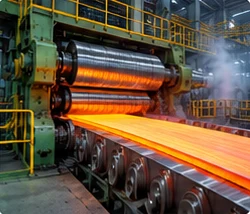
- Steel processing lines: review simultaneous motor loads, reversals and the common-bus energy balance.
How to estimate the benefit without guessing a saving percentage
Record braking power over time and integrate it to obtain energy per cycle. Multiply by the actual cycle count, then account for conversion losses, cooling requirements and the local tariff. Compare that result with the extra equipment and service costs. Recovered braking energy is not the same as total plant energy savings.
Also identify the supply: a utility-fed bus, shipboard generator and isolated generator set can have different restrictions on reverse power. Low-harmonic performance should be assessed at the agreed point and operating conditions; an AFE label alone does not establish compliance for the whole installation.
Where INOMAX ACS drives fit
INOMAX ACS industrial drives can be configured with an AFE regenerative supply for suitable applications. The INOMAX ACS880 platform provides motor-side control options, while the selected supply stage determines line regeneration. Ask for a configuration matched to current, braking duty, cooling and interfaces.
Related evidence: 690 V regenerative mine-hoist project and steel-mill multi-motor modernization. These projects illustrate engineering choices, not a universal saving guarantee.
Frequently asked questions
Does every ACS880 drive return energy to the grid?
No. Regeneration to the AC supply requires the appropriate regenerative supply-side converter and supporting system configuration.
Can a regenerative drive replace a holding brake?
No. Electrical torque control and energy recovery do not replace a mechanical holding brake or the machine safety system.
Can an AFE work with a generator?
It needs a system review. Generator controls, reverse-power capability, protection and the full operating cycle must be checked before selecting regeneration.