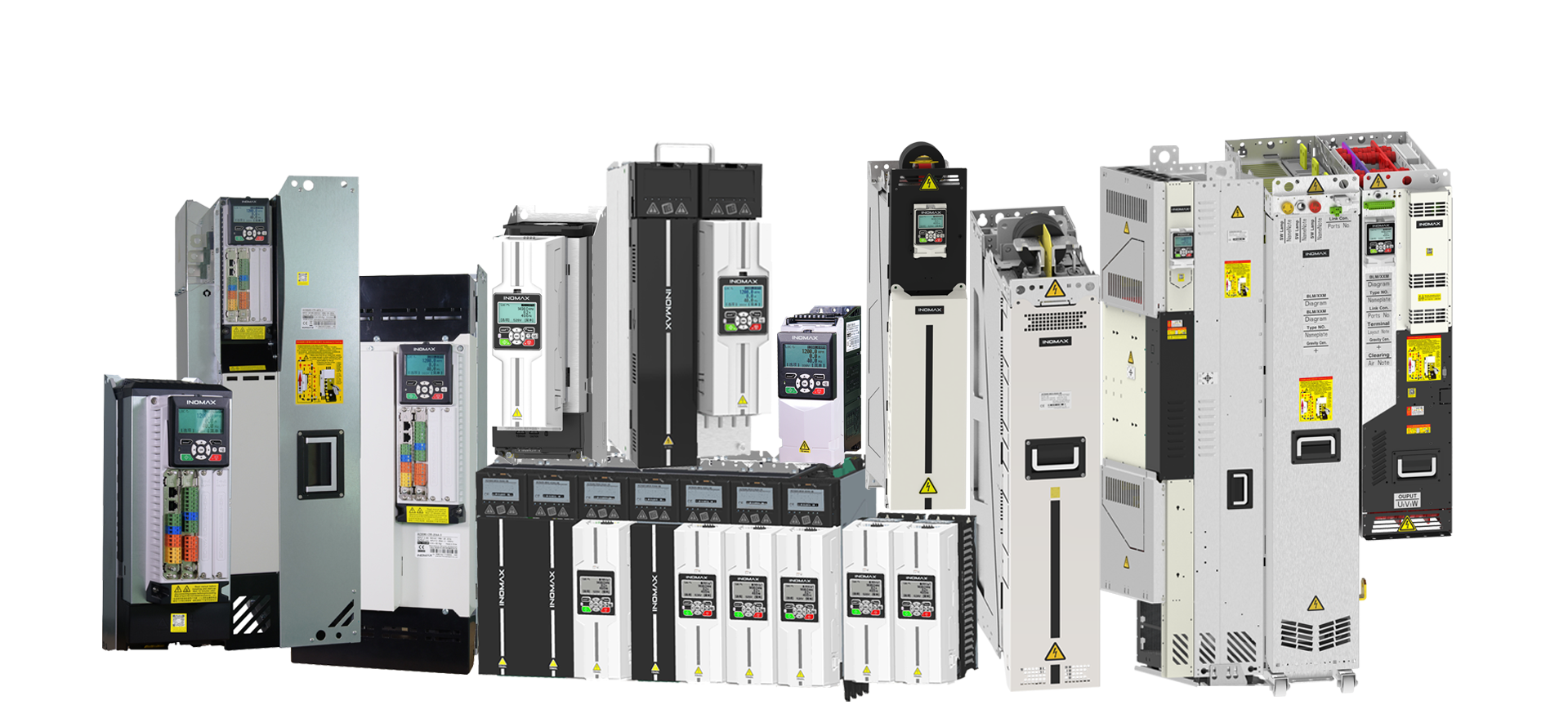
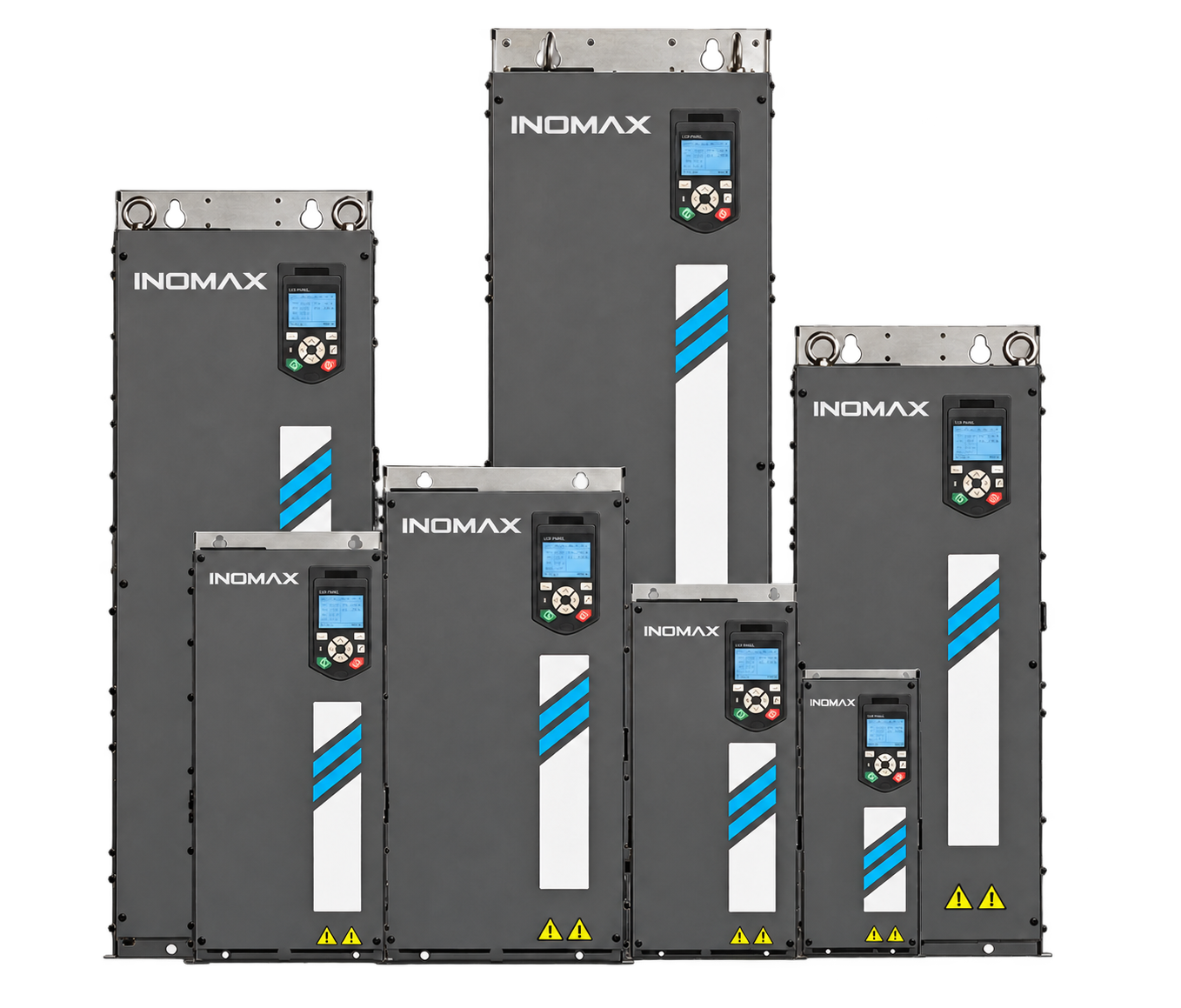
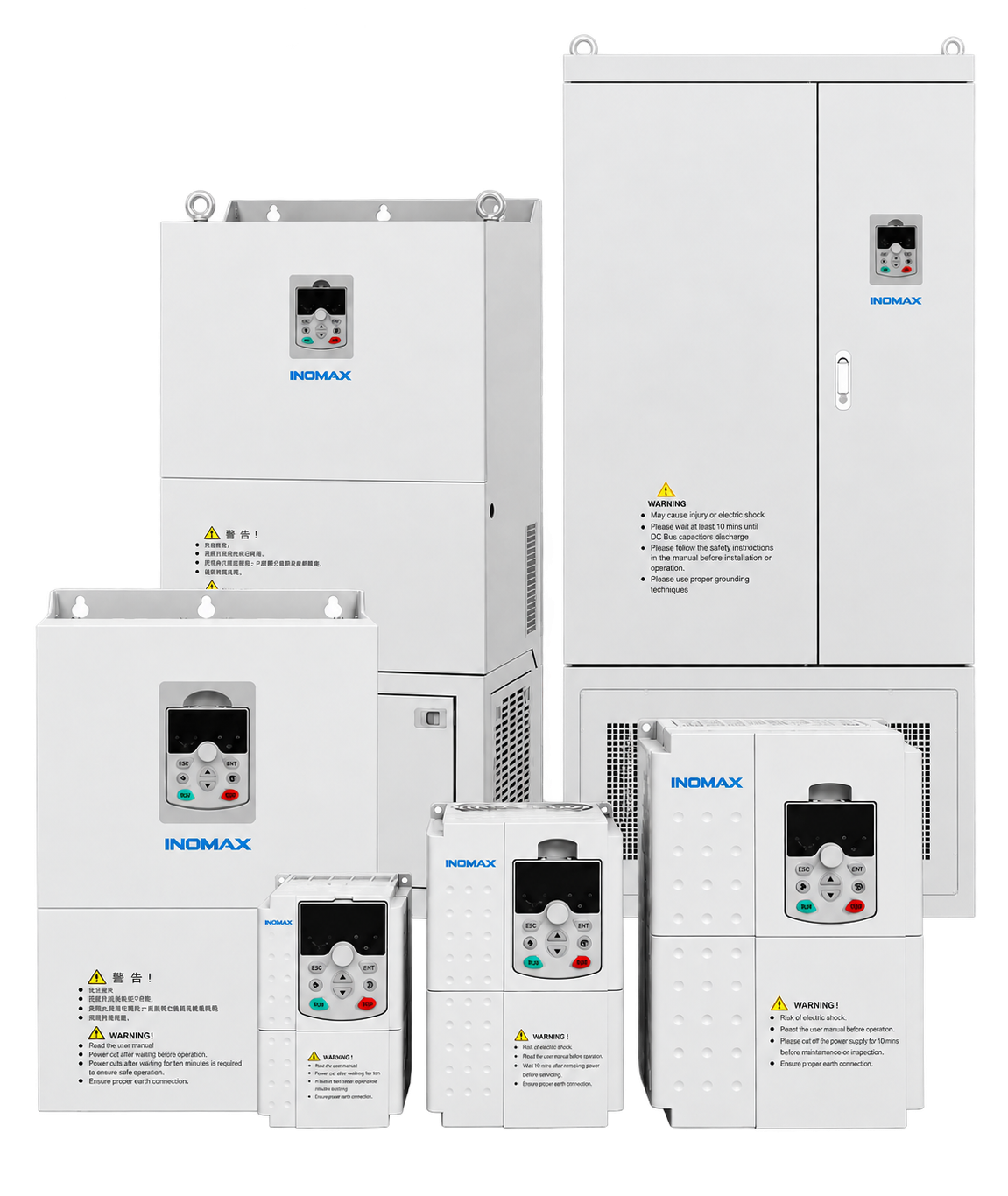
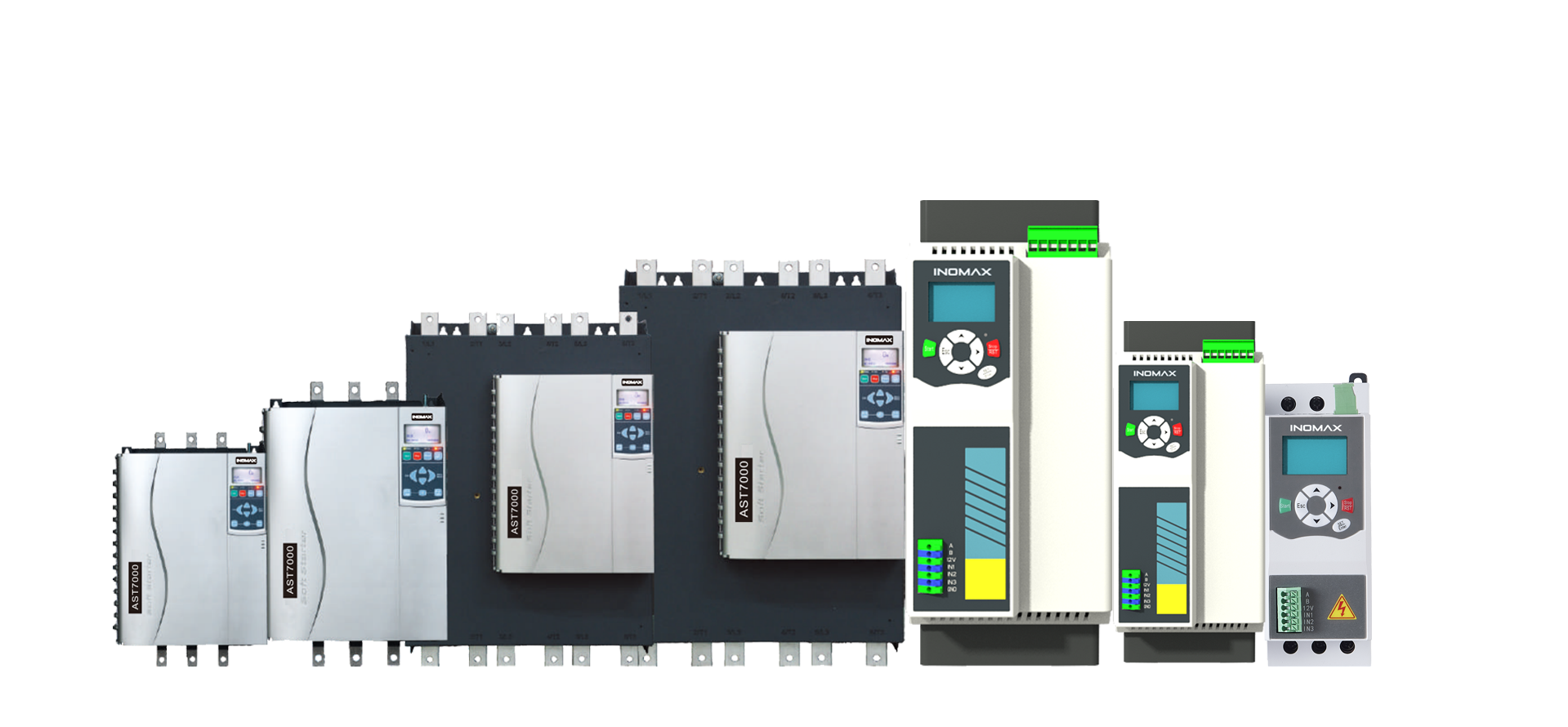






Electronics & power-stage design
ECAD-based board development, schematic-to-PCB checks, power-module thermal modelling and IGBT pulse testing support the development of robust drive hardware.

ABOUT INOMAX
Electronic design, motor-control software and power-conversion engineering.
R&D & TECHNOLOGY
Our company presentation documents a development workflow that connects electronic design, motor-control simulation, thermal analysis and physical testing.
ECAD-based board development, schematic-to-PCB checks, power-module thermal modelling and IGBT pulse testing support the development of robust drive hardware.
Embedded C/C++ development and Simulink motor-control simulation support control algorithms, application functions and software verification.
Engineering covers motor feedback, industrial communication, common DC buses, active rectifiers and air- or liquid-cooled arrangements for the selected application.
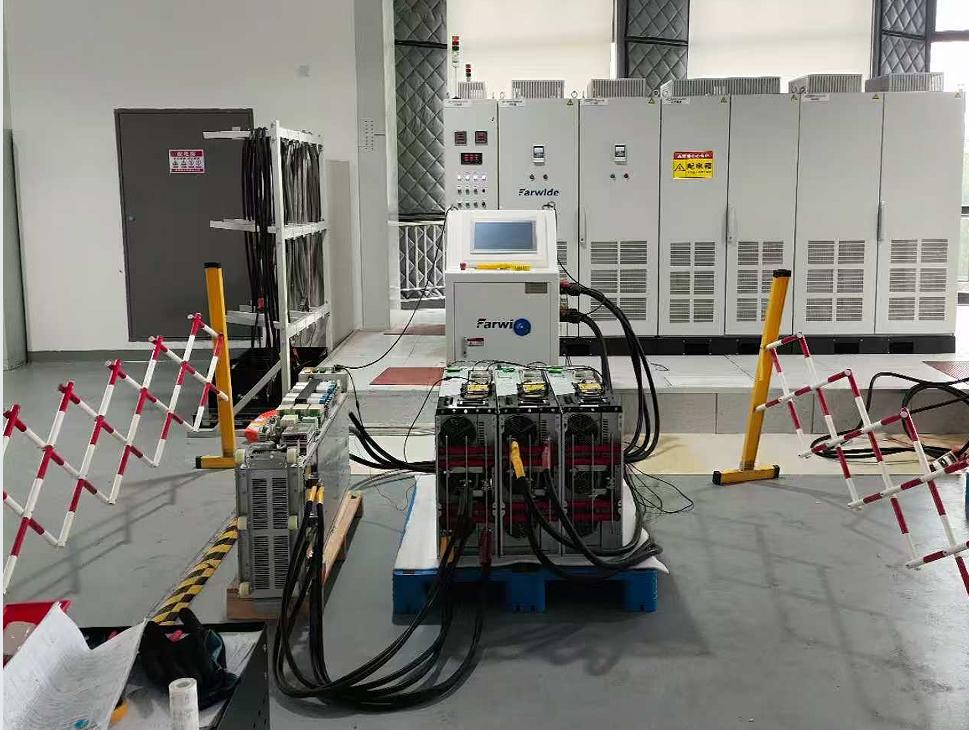
Our advanced drive portfolio combines direct torque control and vector control with regenerative operation, low-harmonic AFE configurations and modular power conversion.
High-speed, PMSM and precision motion applications are assessed against motor characteristics, feedback requirements, current demand and the complete operating cycle.
Interface options across the portfolio include PROFINET, PROFIBUS, Modbus TCP and EtherCAT, with feedback selected for the motor and control task.
These capabilities support low-harmonic AFE drives, four-quadrant regenerative drives, three-level power conversion, liquid-cooled VFD systems, high-speed motors and precision AC servo applications. Not every feature is standard on every model: the selected power stage, controller, option cards and software determine the available functions.
ENGINEERING VERIFICATION
Power-module heat models and IGBT pulse tests support thermal and switching-performance assessment.
ECAD checks, embedded software development and motor-control simulation provide complementary ways to assess a design before and alongside hardware testing.
The motor, supply, load cycle and installation conditions determine the relevant checks. For an engineered cabinet, agree the test scope and acceptance criteria with the project team.
