



Engineering project references

Crane and
hoist drives

From a 5.5 kW slewing motor to a pair of 500 kW grab crane drives, the motion determines what the drive must do.

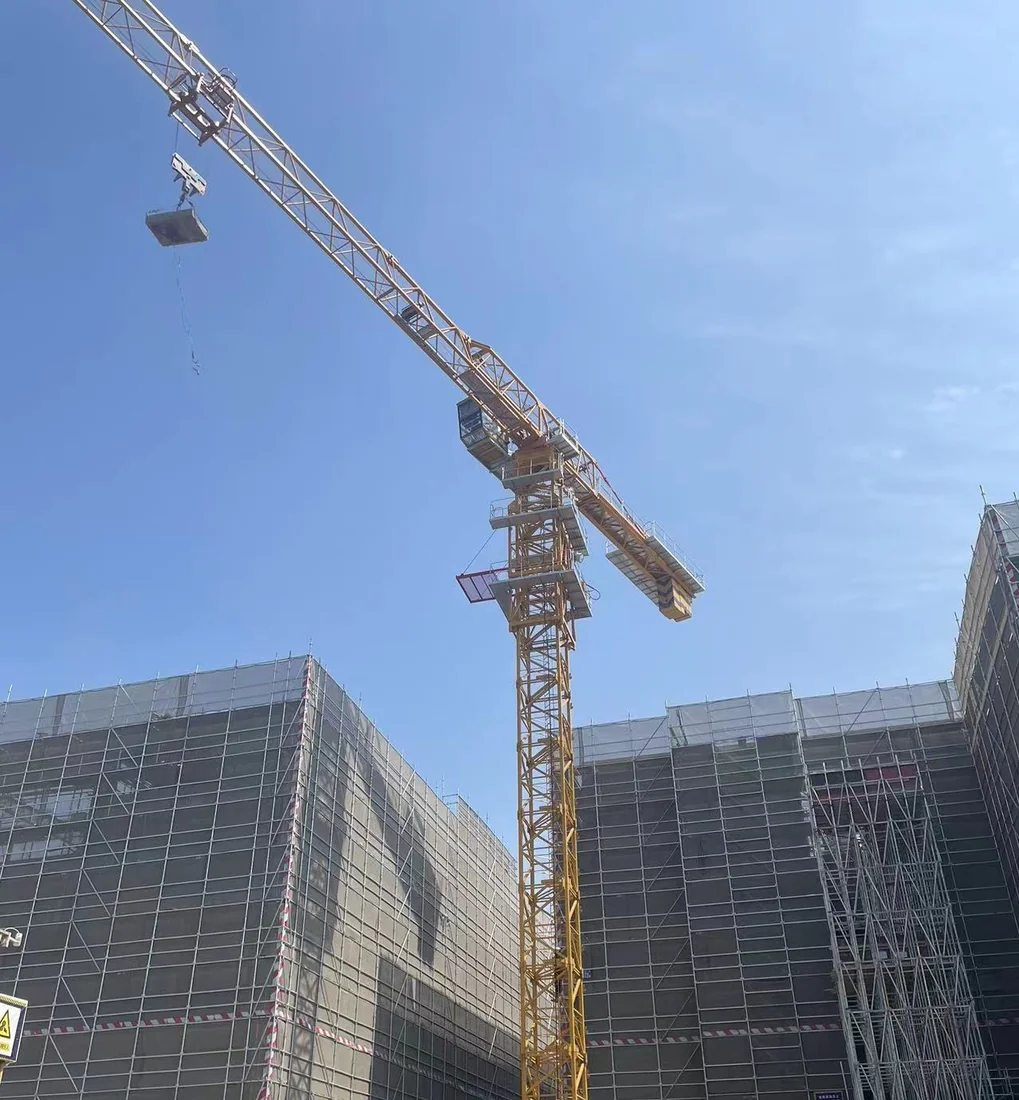
Tower crane on a construction site

Tower crane · construction site
5.5–1,200 kWTower crane and hoist OEM range
5.5–160 kWSecond tower crane OEM range
2 × 500 kWSouth American grab crane

Applications

Project references by motion

Explore the recorded crane motions, drive ratings and field photographs. The shipyard shaft-generator entry is included as a related marine electrical reference.

Tower crane at a construction site.
Tower crane OEM   /   5.5–1,200 kW

Tower cranes and hoists

The OEM specified high torque at low frequency, suspended-load sway control and mechanical brake sequencing across its crane and hoist range.

Brake motor
37 kW · 380 V · 72 A · S3 60%
Brake nameplate
170 V excitation · 500 N·m brake torque
Two smaller motors
5.5 kW each · 12 A and 14 A

Customer record. Site and cabinet photographs accompany three motor nameplates. The 500 N·m value is the torque rating of the motor’s brake.
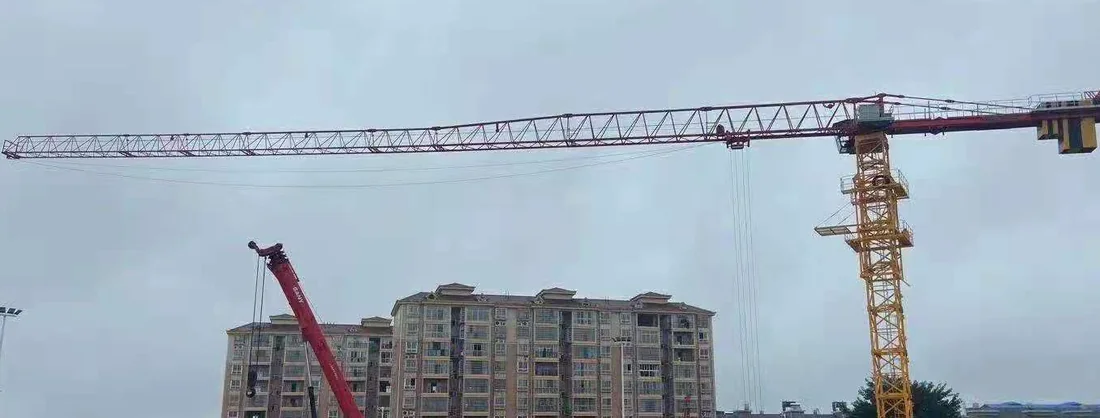
Tower crane jib and mast in the project record.
Tower crane OEM   /   5.5–160 kW

Tower crane slewing and hoisting

The ACC860 application record describes a second OEM that specified low-frequency torque, anti-sway and brake control. Its operator interface identifies separate hoist, radius-adjustment and slewing mechanisms.

Slewing motor
5.5 kW · 380 V · 16.9 A · 1,190 r/min
Motor duty
S3 60% · 5–100 Hz · IP54
Crane configuration
65 m jib · four-part reeving

Customer record. At a displayed radius of 50 m, one HMI screen showed 2.2 t actual against a displayed 2.5 t limit. These readings describe one machine state.

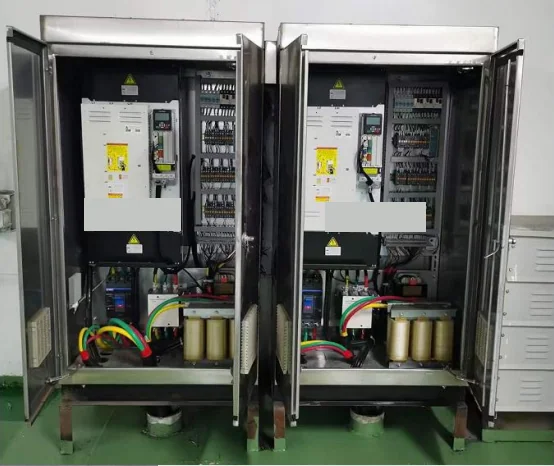
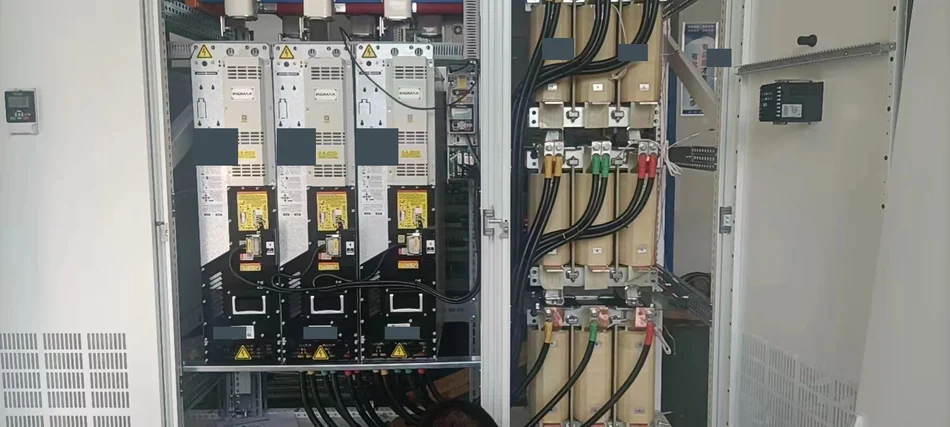
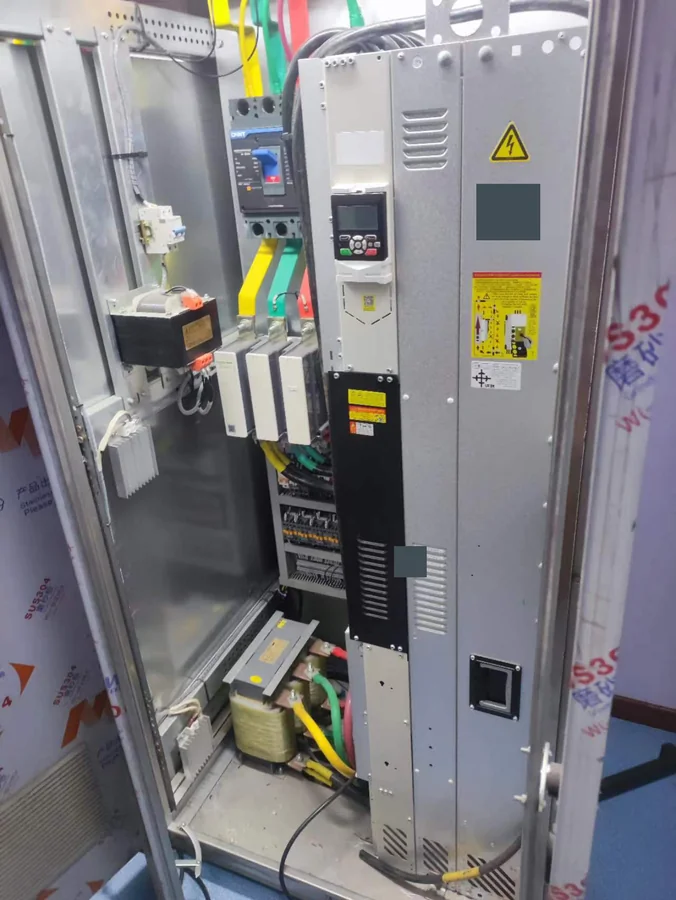
Interior of the drive cabinet shown in the port hoist reference.
Port handling   /   Quayside lifting

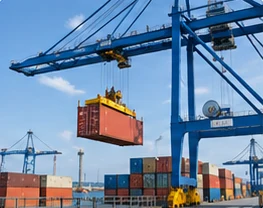
ZPMC port crane hoisting

The customer used a ZPMC port crane. The project photographs show the quayside application and its hoist drive cabinet. A local keypad, incoming breaker and three-phase power conductors are visible inside the cabinet.

Application
Port hoisting
Project evidence
Quayside equipment and drive cabinet
For a comparable system
Motor and brake plates, lowering duty and cabinet environment

Customer record. The available feedback is photographic. A drive rating and measured operating results were not provided for this installation.

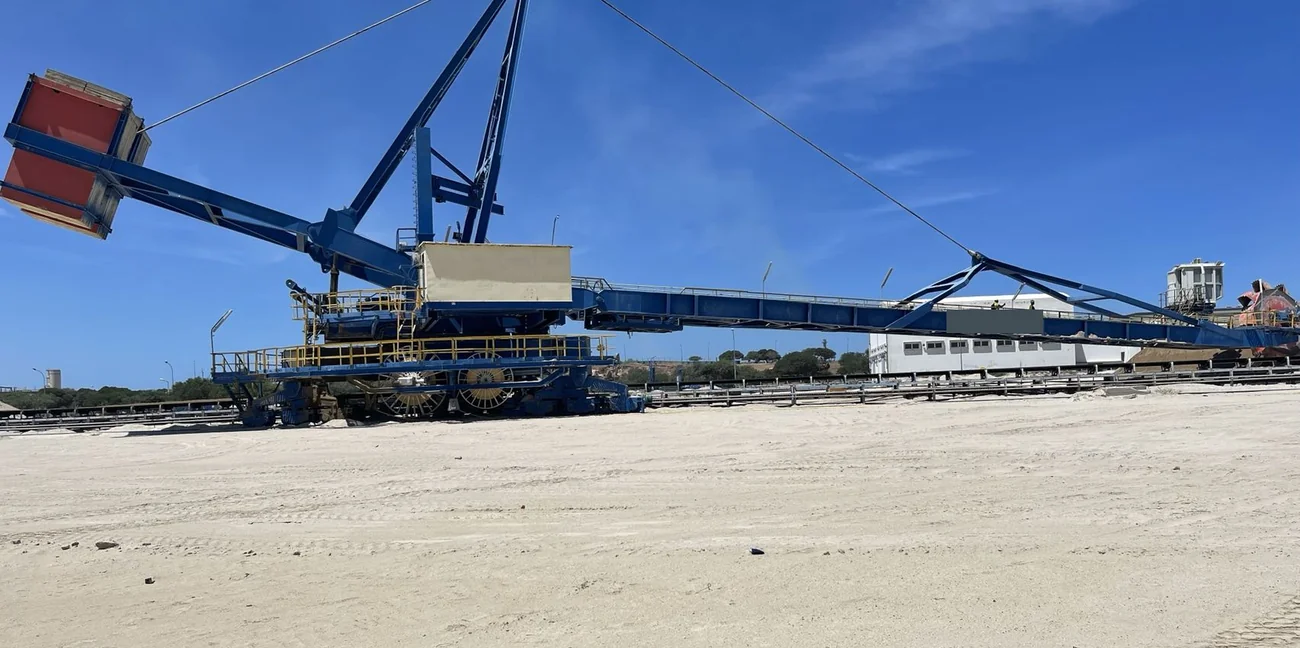
Counterweighted boom on a rail-mounted bulk handling machine.
Bulk material handling   /   ACS880

Stacker/reclaimer boom luffing

The drive application changes the elevation of the stacker/reclaimer boom. Boom angle governs the working position over the stockpile, while the belt on the boom performs a separate conveying duty.

Drive family
INOMAX ACS880
Driven motion
Raising and lowering the counterweighted boom
Project evidence
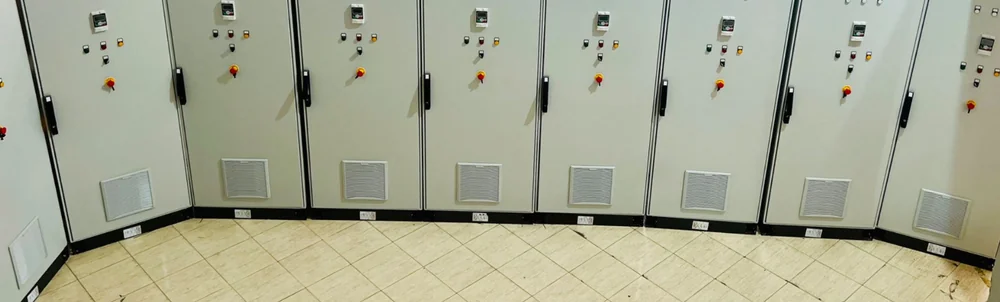
Machine at site, open cabinets and enclosed lineup

Customer record. The project photographs show the machine and the cabinet assembly. The number of cubicles visible does not establish the number of luffing drives.

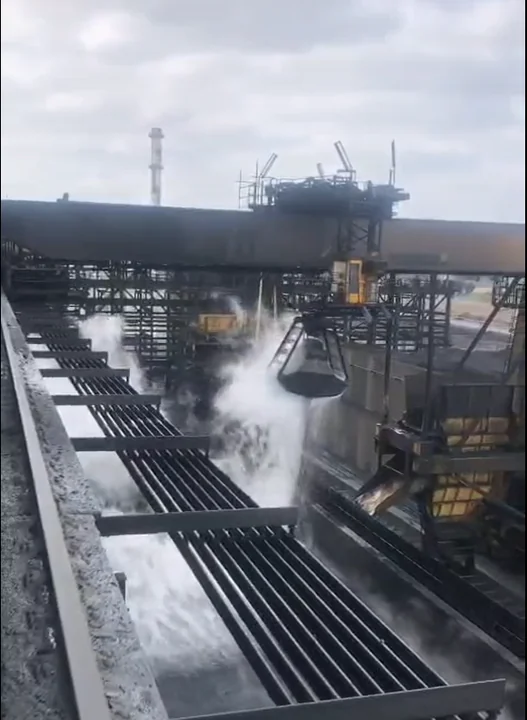
Customer-supplied operating frame showing the suspended grab.
Industrial grab crane   /   2 × 500 kW

Konecranes grab crane hoisting in South America

This South American operation used a Konecranes grab crane with two 500 kW variable-frequency drives for hoisting. Field images show the grab at different heights above and inside the process bay.

Drive quantity
2 VFDs
Rating per drive
500 kW
Sizing inputs for a new crane
Motor count, drum arrangement, load and cycle time

Customer record. The field images show the lifting application. Individual assignments to hoisting or grab closing and any synchronization method were not specified.

Vessel equipment schedule

Drives by crane motion

Motion Motor group Drive group
Auxiliary hook 2 × 400 kW 2 × 500 kW
Main hook 4 × 400 kW 4 × 500 kW
Luffing 2 × 400 kW 2 × 500 kW
Slewing 6 × 110 kW 3 × 280 kW
Tool hanger 2 × 75 kW 2 × 90 kW
Travel 2 × 75 kW 2 × 90 kW

Rectifier supply: 6 × 560 kW, 12-pulse.

Marine crane   /   15 motor-side units

Hoisting, luffing and slewing on a 3,200 t crane ship

The INOMAX ACS880 schedule assigns separate drives to the main hook, auxiliary hook and luffing motions. On the slewing axis, each 280 kW inverter controls two 110 kW motors.

Hooks and luffing
Eight 400 kW motors and eight 500 kW inverters across three motions
Slewing
Six 110 kW motors on three 280 kW inverters
Power supply
Six 560 kW, 12-pulse rectifiers

Customer record. The project equipment list identifies ratings, quantities and model codes for six crane motions and the rectifier supply.

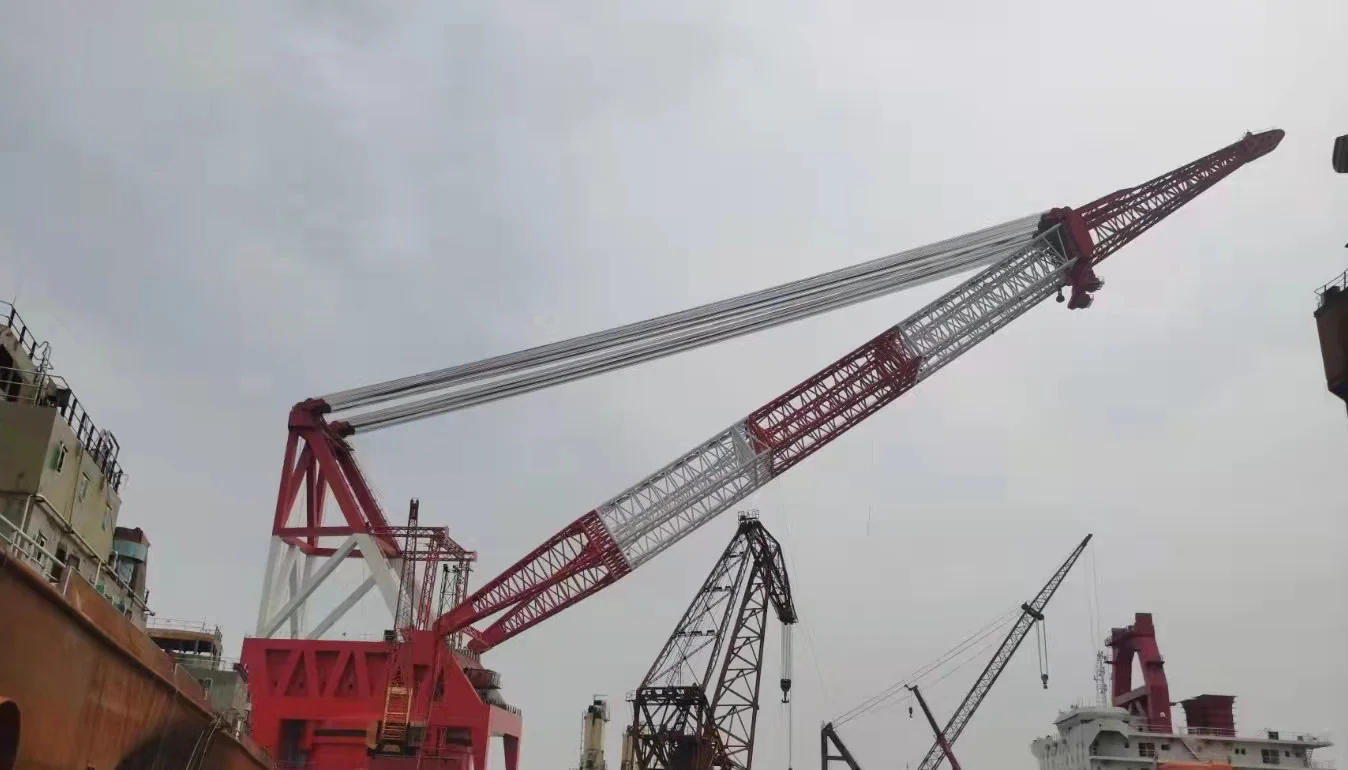
Lattice-boom crane ship pictured in the marine project reference.
Marine crane   /   250 / 355 kW and 8 × 400 kW

Crane-vessel drive ratings and cabinets

One crane-ship entry lists 250 / 355 kW. A second entry on the same project sheet lists eight 400 kW units. The figures are recorded separately because the sheet does not pair them with specific crane motions.

First vessel entry
250 / 355 kW
Second vessel entry
8 × 400 kW
Evidence
Crane-ship photograph and drive cabinet lineup

Customer record. The source sheet includes equipment photographs and power entries. Individual motor assignments and operating measurements are unspecified.

Open electrical cabinets shown in the shaft-generator project sheet.
Related marine electrical application   /   200 / 315 kW

Shaft-generator equipment at a shipyard

The shipyard reference shows quayside lifting equipment alongside open electrical cabinets. The source identifies the electrical application as a shaft generator.

Rated equipment
Shaft generator
Recorded ratings
200 / 315 kW
Crane data
The sheet gives no hoist motor or drive rating

Customer record. The images document the quayside setting and cabinet arrangement. The generator ratings are attributed only to the shaft-generator entry.

Buyer’s electrical specification

Three supply versions

Input Output
3-phase 380 V 3-phase 380 V
1-phase 220 V 3-phase 220 V
1-phase 220 V 3-phase 380 V

The buyer requested separate order codes, heavy-duty ratings and details of the step-up arrangement for the third version.

Iraq · Technical enquiry   /   4–7.5 kW

Private-label hoist drive evaluation

A crane-drive buyer requested small dedicated hoist drives with closed-loop vector control, encoder support, zero-speed holding and torque verification before the mechanical brake opens.

Heavy-duty requirement
150% current for 60 s and 180% for 10 s
Separate torque target
200% starting torque
Evaluation scope
Standard and optional items, electrical versions and OEM supply

Customer record. INOMAX confirmed feasibility for the non-certified requirements. The requested model-specific certified safety package was unavailable. The enquiry carried no purchase commitment.

Drive functions

Controlling the load through a lift

Low-frequency torque

Bring a loaded hoist under motor control as the mechanical brake releases. Use current, speed range and duty from the actual motor plate.

Mechanical brake logic

Coordinate torque verification, brake release, feedback and brake-fault handling across loaded starts and stops.

Sensorless anti-sway

The ACC program shapes travel speed commands during acceleration and deceleration to reduce suspended-load swing.

Controlled lowering

Match the braking duty to the load and cycle. A chopper and resistor or a regenerative active front end can be evaluated for a new installation.

Engineering FAQ

Specifying a crane drive

Selection questions for crane builders, retrofit teams and electrical integrators.

Can INOMAX replace an ABB or Siemens drive on an existing crane?

A replacement can be evaluated against the original drive code, motor and brake plates, encoder, PLC interface and space in the panel. For a hoist, include the brake sequence, rated and peak currents, lowering duty and mandatory safety functions. These determine whether a specific model can be offered.

Why do three 5.5 kW crane motors need different drive checks?

The project plates show 12 A, 14 A and 16.9 A at 380 V. The connections, intermittent duties and speed ranges also differ. Supply the actual motor plate and load cycle so the drive current and overload rating can be selected for the axis.

Does the anti-sway function need a swing sensor?

The INOMAX ACC program described here estimates sway and shapes the speed reference without a dedicated swing sensor. Identify whether the motion is trolley travel, bridge travel or tower-crane slewing. Specify the load and rope-length range and how residual swing will be assessed.

Can I use a braking resistor, or should the hoist return energy to the supply?

Both are options to evaluate. Provide the suspended load, lowering speed, time per descent and cycles per hour. Those figures allow engineering to size a chopper and resistor or assess a four-quadrant active front end (AFE) against site power-system requirements.

How do you select drives for two motors or two independent hooks?

A shared drum may call for torque sharing. Independent hooks may require position synchronization. Send the mechanical layout, encoders, brake arrangement, required position tolerance and response to a fault on either axis.

Can the drive use an existing encoder, PLC and mechanical brake?

Provide the encoder type and supply, feedback resolution, PLC command interface, brake coil voltage, release time and available brake feedback. Engineering can then identify the appropriate feedback card, I/O and coordination sequence.

Is ordinary mechanical brake control the same as certified Safe Brake Control (SBC)?

Ordinary brake logic coordinates operating torque and the mechanical brake. A procurement requirement for certified SBC needs model-specific certification and a safety manual. The evaluated package could not meet the requested certified STO, SBC, SS1, SLS, SOS, SDI and SSM functions at the specified SIL or PL levels.

Can a small crane use a single-phase 220 V supply with a three-phase motor?

A private-label enquiry included three versions: 380 V three-phase in/out, 220 V single-phase to 220 V three-phase, and 220 V single-phase to 380 V three-phase. Request the precise order code, continuous current and heavy-duty derating. For voltage step-up, the quotation should identify whether it is internal or external.

What do you need to quote an OEM supply or meet a shutdown date?

Send the axis list, motor and brake data, duty cycle, site conditions, mandatory certificates, quantity and required date. For private-label supply, identify the branding, documentation and firmware changes. The quotation can then define options, commissioning support, lead time and warranty.

Project enquiry

Discuss your hoist duty

Send the motor and brake nameplates, the driven motion, the operating cycle and any mandatory certification.

info@inomaxtechnology.com

Customer confidentiality

Customer identities and selected engineering details are withheld to respect privacy and confidentiality agreements. INOMAX sales can share further technical information for a comparable project within the applicable permissions.