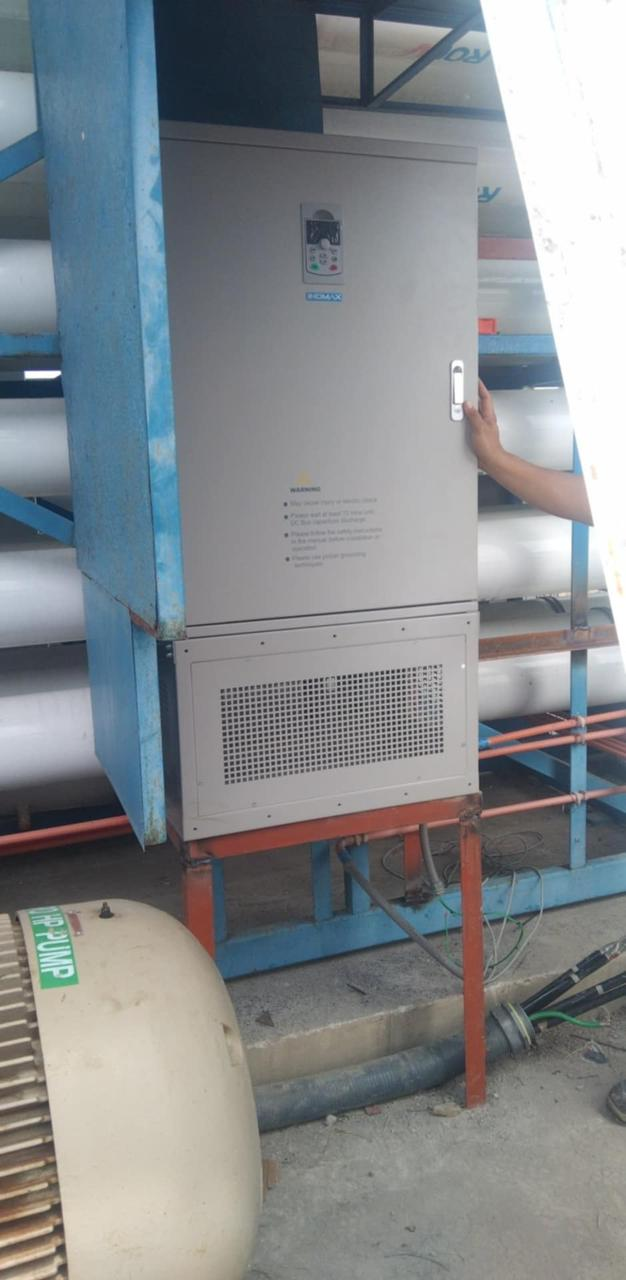
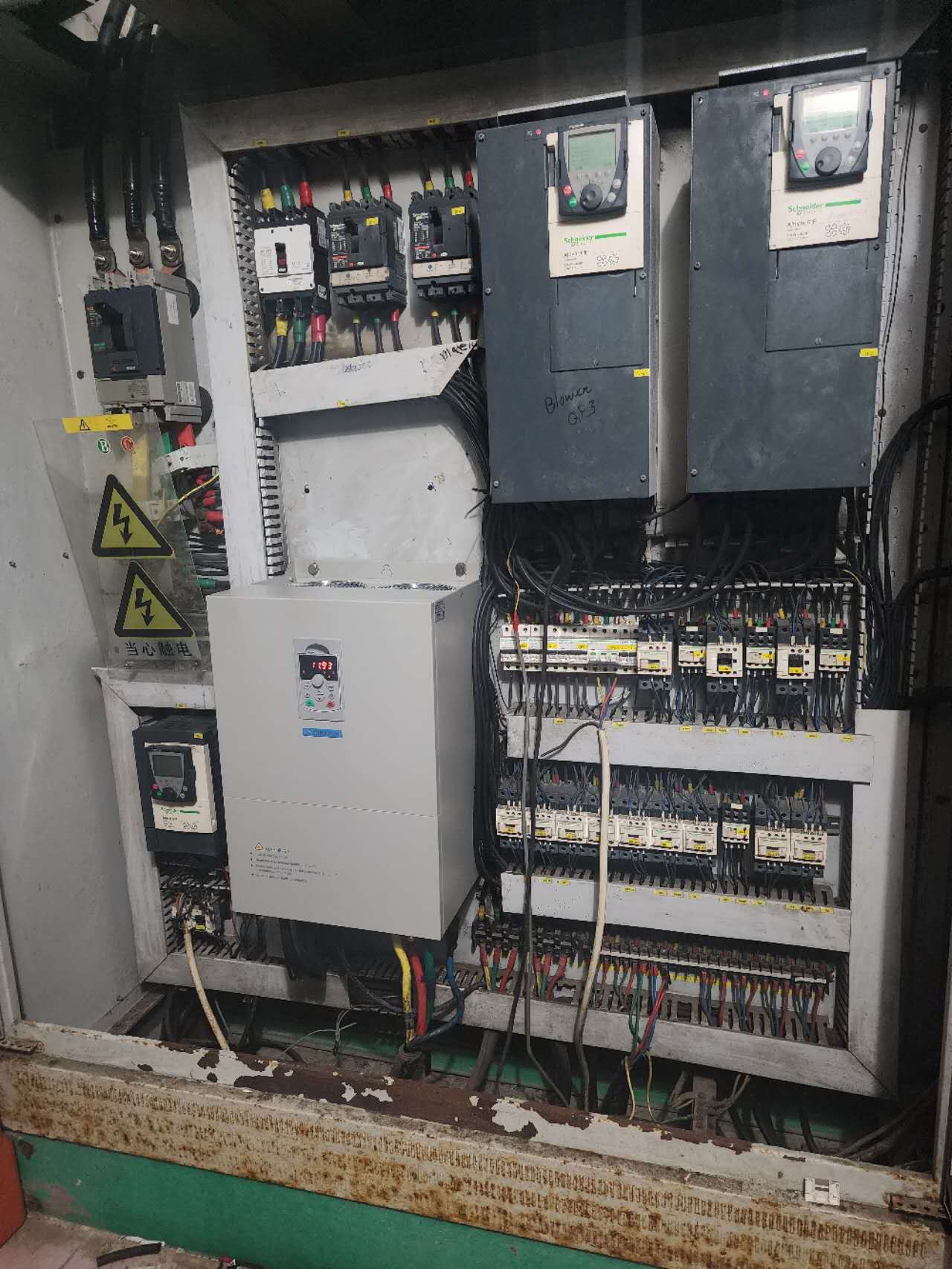
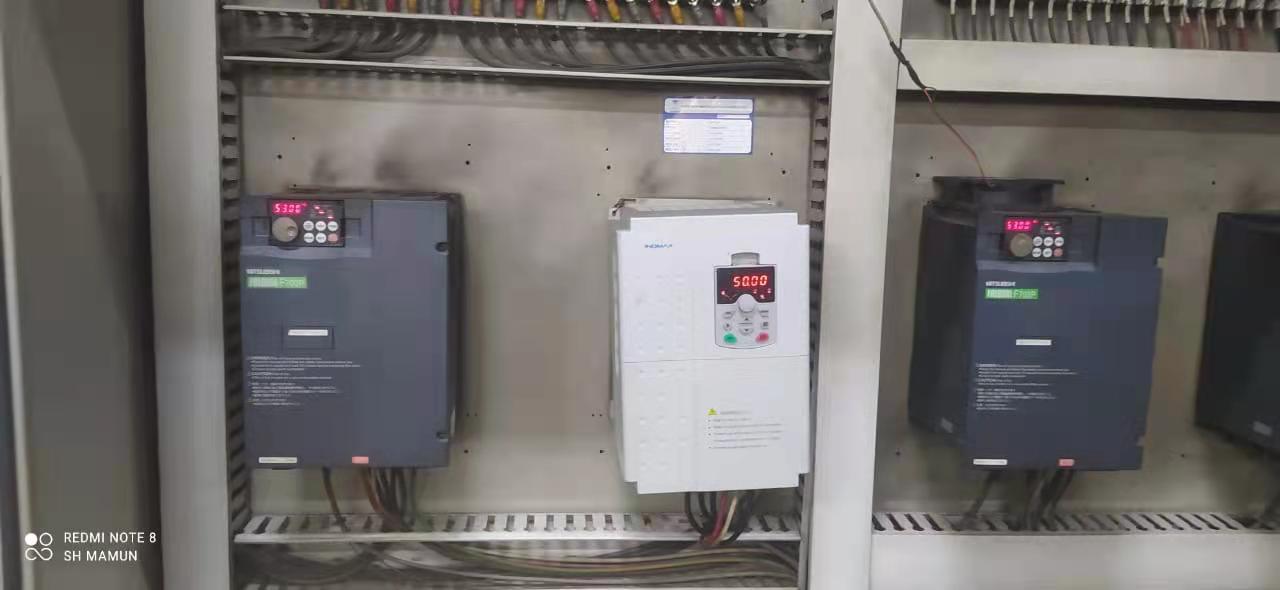
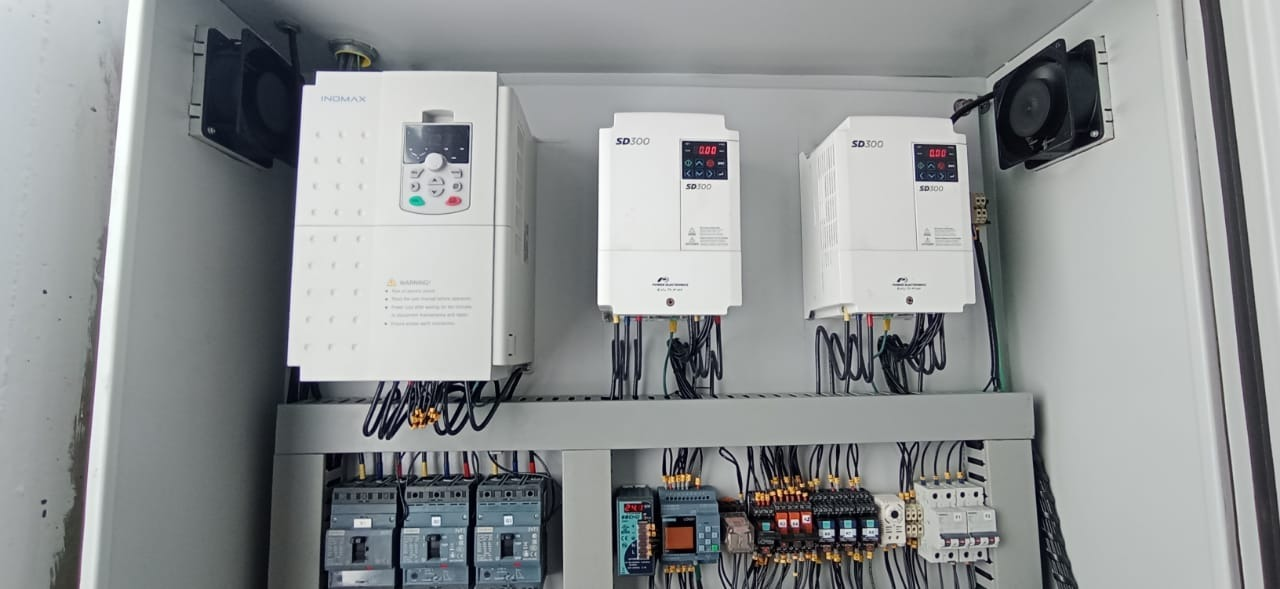
INOMAX MAX550 & ACS580 for Permanent Magnet Synchronous Motors
High-Efficiency Drive Solutions for IE4, IE5, and Ultra-Premium Efficiency PMSM Applications
Overview
Permanent Magnet Synchronous Motors (PMSMs) are rapidly transforming industrial motor applications. Unlike traditional induction motors that rely on induced rotor currents (which inherently waste energy as heat), PMSMs use high-energy rare-earth magnets embedded in the rotor to generate a constant magnetic field. The result? Higher efficiency, smaller footprint, lower operating temperatures, and superior dynamic performance — all at a total cost of ownership that often beats induction motors within months.
However, PMSMs cannot be driven by standard V/Hz (scalar) drives. They require sophisticated vector control algorithms that can manage the motor’s back-EMF, rotor position, and field-weakening characteristics. At Inomax Technology, our MAX550 and ACS580 series drives are specifically engineered to unlock the full potential of permanent magnet synchronous motors.
Which INOMAX drive is right for your PMSM application?
| Series | Power Range | Control Technology | Ideal For |
|---|---|---|---|
| MAX550 | 0.75 kW – 630 kW | Advanced sensorless vector control with PMSM‑specific algorithms | Pumps, fans, compressors, conveyors, general industrial — cost‑effective IE4/IE5 motor control |
| ACS580 | 0.75 kW – 500 kW (single drive), up to 2,000 kW (multidrive) | Direct Torque Control (DTC)‑derived vector control, optional closed‑loop encoder feedback | High‑performance applications requiring precise speed/torque regulation, dynamic response, and fieldbus integration |
Both drives support:
-
Asynchronous induction motors (IM)
-
Permanent magnet synchronous motors (PMSM)
-
Synchronous reluctance motors (SynRM)
-
Optimum pole motors
Why Permanent Magnet Synchronous Motors? The Efficiency Advantage
1. IE4 / IE5 Efficiency — Meeting the Strictest Global Standards
Permanent magnet motors consistently achieve IE4 (Super Premium) and IE5 (Ultra Premium) efficiency levels. Their superior efficiency stems from the complete absence of rotor losses (I²R losses) — energy that would otherwise be wasted as heat in induction motor rotors
| Efficiency Class | Minimum Efficiency (75 kW example) | Typical PMSM Performance |
|---|---|---|
| IE3 (Premium) | 95.0% | — |
| IE4 (Super Premium) | 95.5%+ | Easily achieved |
| IE5 (Ultra Premium) | 96.5%+ | Achieved with optimized design |
Real‑world impact: IE4 compliance means more electrical energy is converted directly into mechanical energy rather than being lost as heat. For a 75 kW motor running 6,000 hours per year, a 1.5% efficiency improvement saves approximately 6,750 kWh annually — worth $800–$1,000 depending on electricity rates.
2. Exceptional Partial‑Load Efficiency — Where Induction Motors Fall Short
This is perhaps the most significant advantage of PMSMs for variable-speed applications. Induction motor efficiency drops sharply below 50% load — typically by 12–18% In contrast, PMSMs maintain over 94% efficiency across a 10–150% load range due to precise field‑weakening control capabilities
Why this matters: Many industrial applications — pumps, fans, compressors, conveyors — operate at partial load for significant portions of their duty cycle. A PMSM continues to deliver near‑peak efficiency even when demand drops, while an induction motor wastes progressively more energy as load decreases.
3. Higher Power Density — More Power in Less Space
PMSMs produce approximately 40% more torque density than standard induction motors because they eliminate energy‑draining rotor cages and focus magnetic fields more effectively Industrial PMSMs often achieve power outputs exceeding 5 kW per kilogram
Compared to the same power and speed induction motor (IE3), the PMSM volume is reduced by one to two frame sizes — not only improving motor efficiency but also reducing motor weight and volume–. Axial flux PMSM designs can cut motor length by 25–35% compared to traditional radial flux designs
Practical benefit: Smaller motors fit into tighter machinery spaces, reduce structural support requirements, and often enable direct drive configurations that eliminate gearboxes, belts, and chains.
4. Reduced Operating Temperature — Longer Motor Life
Because PMSMs eliminate rotor losses (which manifest as heat), they run significantly cooler than induction motors under the same load. This results in:
-
Longer bearing life (lower operating temperature reduces grease degradation)
-
Extended winding insulation life (every 10°C reduction doubles insulation life)
-
Smaller cooling requirements (or elimination of forced cooling in many applications)
5. Precise Speed Control — No Slip, No Drift
Induction motors inherently have 1–3% slip — the rotor rotates slightly slower than the stator’s magnetic field. PMSMs are synchronous machines: the rotor spins at exactly the same speed as the magnetic field produced by the stator windings.This synchronicity delivers superior dynamic performance and speed control accuracy.
Speed range: PMSMs are typically rated for 20:1 speed range without feedback or 2000:1 with closed‑loop encoder feedback.
Why PMSMs Need Specialized VFDs — And How MAX550 and ACS580 Deliver
The Challenge: PMSM Control is Not V/Hz
An induction motor can be started and run with simple V/Hz (scalar) control because slip automatically adjusts to load. A PMSM cannot. The rotor’s permanent magnets create a constant magnetic field; without proper control, the motor can:
-
Lose synchronization and stall
-
Generate uncontrolled back‑EMF voltage that damages the drive
-
Experience torque ripple and instability at low speeds
-
Demagnetize the permanent magnets if over‑currented
The Solution: Vector Control with PMSM‑Specific Algorithms
Our MAX550 and ACS580 drives employ advanced vector control (field‑oriented control) specifically tuned for permanent magnet motors. Key requirements include:
| Requirement | How INOMAX Delivers |
|---|---|
| Motor parameter identification | Auto‑tuning routine (H00‑15) automatically identifies stator resistance, d‑axis and q‑axis inductance, and back‑EMF constant — eliminating manual parameter entry |
| Back‑EMF management | The drive monitors motor back‑EMF and adjusts output voltage to prevent uncontrolled voltage rise — essential for overspeed protection |
| Rotor position detection | Sensorless vector control algorithms estimate rotor position from electrical measurements; optional encoder provides closed‑loop precision |
| Field‑weakening control | Allows the motor to operate above base speed by reducing flux, extending the usable speed range |
MAX550 for PMSM — Cost‑Effective, Feature‑Rich
The MAX550 series is our dedicated PMSM drive, offering:
-
Sensorless vector control as standard — no encoder required for 95% of applications
-
Auto‑tuning that identifies all critical PMSM parameters (stator resistance, d‑axis inductance, q‑axis inductance, back‑EMF constant)
-
MTPA (Maximum Torque Per Ampere) control — optimizes the current angle to produce maximum torque with minimum current, reducing energy consumption
-
Field‑weakening control — extends speed range above base speed
-
Wide power range — 0.75 kW to 630 kW, covering everything from small fans to large industrial compressors
-
Cost‑effective — significantly lower price than premium European or Japanese PMSM drives
ACS580 for PMSM — High Performance with Direct Torque Control
The ACS580 series takes PMSM control to the next level with DTC‑derived vector control:
-
Superior low‑speed torque — 200% starting torque at 0.5 Hz
-
Faster torque response — <10 ms torque step rise time
-
Closed‑loop encoder feedback — optional incremental encoder support for applications requiring highest precision
-
Advanced fieldbus integration — Profinet, EtherCAT, EtherNet/IP, Modbus, CANopen
-
Built‑in energy optimizer — automatically reduces motor losses for additional energy savings beyond PMSM’s inherent efficiency
Technical Specifications: MAX550 for PMSM
| Parameter | Specification |
|---|---|
| Power range | 0.75 kW – 630 kW (1 HP – 850 HP) |
| Voltage range | 3‑phase 380–480 VAC (±10%), 50/60 Hz |
| Output frequency | 0 – 400 Hz (V/F control up to 3,200 Hz) |
| Control method | Sensorless vector control (SVC) with PMSM‑specific algorithms; closed‑loop vector (FVC) with optional PG card |
| Motor types supported | Induction motors, permanent magnet synchronous motors (PMSM), synchronous reluctance motors (SynRM) |
| Starting torque | 0.5 Hz / 150% (SVC); 0 Hz / 180% (FVC with encoder) |
| Speed range | 1:200 (SVC); 1:1000 (FVC) |
| Speed accuracy | ±0.5% (SVC); ±0.02% (FVC) |
| Overload capacity | 150% for 60s, 180% for 3s, 200% for 1s |
| PMSM auto‑tuning | Static auto‑tuning for stator resistance, d‑axis inductance, q‑axis inductance; requires manual back‑EMF input or dynamic auto‑tuning for full parameter identification |
| MTPA control | Yes (built‑in) |
| Field‑weakening control | Yes (adjustable parameters H02‑18 to H02‑21) |
| Communication | Modbus RTU, CANopen standard; Profibus, Profinet, EtherNet/IP optional |
| EMC filter | Built‑in C3 filter standard |
| Conformal coating | Standard |
| Enclosure | IP20 standard; IP55 optional |
Technical Specifications: ACS580 for PMSM
| Parameter | Specification |
|---|---|
| Power range | 0.75 kW – 500 kW (single drive), up to 2,000 kW (multidrive) |
| Voltage range | 3‑phase 380–480 VAC (±10%), 50/60 Hz |
| Control method | DTC‑derived vector control; supports both sensorless and closed‑loop (encoder feedback) |
| Motor types supported | Induction motors, permanent magnet motors (PM), synchronous reluctance motors (SynRM) |
| Starting torque | 200% at 0.5 Hz (sensorless) |
| Torque step rise time | <10 ms |
| Speed accuracy | ±0.5% of motor slip (open loop); ±0.01% (closed loop with encoder) |
| Overload capacity | 150% for 60s |
| PMSM support | Fully compatible with high‑efficiency permanent magnet motors |
| Communication | Modbus RTU standard; optional Profibus, Profinet, EtherNet/IP, CANopen |
| Energy optimizer | Built‑in, reduces motor energy consumption by 5–15% |
| EMC filter | Built‑in C3 filter standard |
| Conformal coating | Standard |
| Enclosure | IP20 standard; IP21, IP55 optional |
Key PMSM Control Parameters in MAX550
When setting up a MAX550 for a permanent magnet motor, the following parameters must be correctly configured:
| Parameter | Description | Typical Value Range |
|---|---|---|
| P1-00 | Motor type selection | Set to 2 (permanent magnet synchronous motor) |
| P1-01 | Motor rated power | From motor nameplate (kW) |
| P1-02 | Motor rated voltage | From motor nameplate (V) |
| P1-03 | Motor rated current | From motor nameplate (A) |
| P1-04 | Motor rated frequency | From motor nameplate (Hz) |
| P1-05 | Motor rated speed | From motor nameplate (RPM) |
| P1-16 | Stator resistance (Rs) | Auto‑tuned or manually entered (Ω) |
| P1-17 | d‑axis inductance (Ld) | Auto‑tuned or manually entered (mH) |
| P1-18 | q‑axis inductance (Lq) | Auto‑tuned or manually entered (mH) |
| P1-20 | Back‑EMF constant (Ke) | From motor datasheet or calculated (V) |
| P1-37 | Motor auto‑tuning selection | 11: Loaded static tuning; 12: No‑load complete tuning |
| P2-18 | Field‑weakening mode | 0: No field weakening; 1: Auto adjustment; 2: Calculation + auto |
| P2-19 | Field‑weakening coefficient | 1–50 (typically 5) |
| P2-20 | Maximum field‑weakening current | 1–300% (typically 50%) |
Note: The back‑EMF constant (P1-20) must be correctly entered for proper PMSM operation. If the nameplate indicates back‑EMF E’ (V/1000 RPM), calculate as E = E’ × n/1000, where n is rated speed. If not marked, approximate as E = P/(1.65 × I), where P is rated power (W) and I is rated current (A).
PMSM Auto‑Tuning Procedure (MAX550)
Proper auto‑tuning is essential for optimal PMSM performance. The MAX550 supports two auto‑tuning methods:
Method 1: No‑load complete tuning (P1-37 = 12) — Recommended
-
Requires the motor shaft to be disconnected from the load
-
The drive performs static tuning, then accelerates to 40% of rated frequency, holds, and decelerates to stop
-
Automatically identifies stator resistance, d‑axis inductance, q‑axis inductance, and back‑EMF constant
-
Takes approximately 2–3 minutes
Method 2: Loaded static tuning (P1-37 = 11)
-
Used when the motor cannot be disconnected from the load
-
Identifies stator resistance, d‑axis inductance, and q‑axis inductance only
-
Back‑EMF constant (P1-20) must be manually entered
-
The motor may vibrate slightly during tuning — ensure mechanical safety
Steps for no‑load complete tuning:
-
Disconnect the motor from the load (mechanically separate)
-
Set P0-02 = 0 (keypad control)
-
Enter motor nameplate parameters (P1-00 through P1-05)
-
Set P1-37 = 12
-
Press the RUN key — the display shows “TUNE”
-
Wait approximately 2–3 minutes for completion
-
The drive automatically calculates and stores PMSM parameters
Application Case Studies
Case Study 1: Food Processing Facility — IE4 PMSM Fan Retrofit (MAX550)
Location: Midwest USA
Application: 55 kW exhaust fan serving oven exhaust system
Operation: 24/7 continuous, load varies with production schedule
Old motor: 55 kW IE3 induction motor with V/Hz drive, consuming 480,000 kWh annually
Challenge: The facility’s energy audit identified fan systems as the second‑largest electricity consumer. The existing induction motor’s efficiency dropped below 90% during off‑shift periods when the fan ran at reduced speed (50–60% of full load).
Solution: Installed MAX550‑4055 (55 kW) drive with a new IE4 PMSM motor. Configured sensorless vector control for PMSM. Performed no‑load complete auto‑tuning (P1-37 = 12). Enabled energy optimizer mode.
Results:
-
Motor efficiency increased from 93.5% (IE3 induction) to 95.8% (IE4 PMSM) — a 2.3 percentage point gain
-
Partial‑load efficiency (at 60% speed) improved from 87% to 94% — a 7 percentage point gain
-
Annual energy consumption reduced by 68,000 kWh
-
Annual cost savings at $0.11/kWh: $7,480
-
Motor operating temperature reduced by 14°C
-
Payback period: 14 months (including new PMSM motor cost)
Case Study 2: Municipal Water Treatment Plant — High‑Efficiency Pump Drive (MAX550)
Location: Ontario, Canada
Application: 90 kW centrifugal pump for raw water intake
Operation: Variable flow demand based on treatment plant throughput (40–100% of capacity)
Old system: Fixed‑speed induction motor with throttling valve — highly inefficient at partial flow
Challenge: The water treatment plant had committed to reducing energy consumption by 20% as part of a municipal sustainability initiative. Pumping systems were identified as the primary opportunity.
Solution: Installed MAX550‑4090 (90 kW) drive with IE5 PMSM motor. Configured PID pressure control to maintain constant discharge pressure. Enabled sleep/wake‑up mode to stop the pump during zero‑demand periods.
Results:
-
Pump energy consumption reduced by 34% (validated by 6‑month energy monitoring)
-
Annual energy savings: 186,000 kWh
-
Annual cost savings at $0.09/kWh: $16,740
-
PMSM motor achieved 96.2% efficiency at 75% load — 3.5 percentage points higher than the replaced IE3 induction motor
-
Valve maintenance eliminated (no more throttling valve wear)
-
Payback period: 11 months
Case Study 3: Automotive Assembly Plant — Conveyor System Upgrade (ACS580)
Location: Southeast USA
Application: 45 kW assembly line conveyor with frequent start/stop cycles
Operation: 2 shifts, 16 hours/day, highly cyclic load
Old system: 45 kW induction motor with across‑the‑line starting — high inrush current, frequent belt wear, poor speed control
Challenge: The conveyor required precise speed synchronization with downstream equipment. The existing induction motor exhibited speed drift under varying load, causing product spacing issues.
Solution: Installed ACS580‑01‑062A‑4 (45 kW) drive with IE5 PMSM motor. Configured closed‑loop vector control with incremental encoder feedback. Programmed S‑curve acceleration to reduce mechanical stress.
Results:
-
Speed regulation improved to ±0.02% (encoder feedback)
-
Conveyor synchronization errors eliminated
-
Energy consumption reduced by 23% (PMSM efficiency + energy optimizer)
-
Inrush current eliminated — reduced peak demand charges by $2,400/year
-
Belt life extended from 8 months to 22 months
-
Payback period: 10 months
Case Study 4: Industrial Air Compressor — PMSM VFD Retrofit (MAX550)
Location: Germany
Application: 75 kW rotary screw air compressor, variable air demand (30–80% of capacity)
Old system: Fixed‑speed induction motor with load/unload control — wasted energy during unloaded operation (25–30% of full load power consumed even when producing zero air)
Challenge: The facility’s air demand varied significantly between shifts. The load/unload control method consumed substantial energy during unloaded periods.
Solution: Installed MAX550‑4075 (75 kW) drive with IE4 PMSM motor. Configured PID pressure control with 0.8 bar bandwidth. Enabled sleep mode: compressor stops after 30 seconds at minimum speed, restarts when pressure drops to wake‑up setpoint.
Results:
-
Total energy consumption reduced by 31%
-
Unloaded energy consumption eliminated (PMSM uses <5% of rated power at idle vs. 25–30% for induction motor)
-
Annual energy savings: 168,000 kWh
-
Annual cost savings at €0.15/kWh: €25,200
-
Compressor starts reduced from 180 per day to 12 per day
-
Oil change interval extended by 40%
-
Payback period: 9 months
Case Study 5: HVAC Chiller Plant — High‑Speed Compressor Drive (ACS580)
Location: Singapore
Application: 250 kW centrifugal chiller compressor for commercial building HVAC
Operation: 12 hours/day, variable cooling load (20–100% of capacity)
Old system: Fixed‑speed induction motor with inlet guide vanes — IGV losses at partial load (15–20% energy penalty)
Challenge: The building management system required BACnet integration for remote monitoring and energy reporting. Harmonic distortion from existing drives exceeded utility limits.
Solution: Installed ACS580‑04‑430A‑4 (250 kW) drive with IE5 PMSM motor. Configured BACnet communication (optional module). Enabled energy optimizer and field‑weakening control for extended speed range.
Results:
-
Chiller energy consumption reduced by 27% (PMSM efficiency + elimination of IGV losses)
-
Annual energy savings: 324,000 kWh
-
Annual cost savings at $0.12/kWh: $38,880
-
Harmonic distortion reduced to <5% (ACS580 built‑in EMC filter)
-
BACnet integration enabled real‑time energy monitoring and reporting
-
Chiller COP (Coefficient of Performance) improved by 18%
-
Payback period: 16 months
MAX550 vs. ACS580 for PMSM: Which Drive Should You Choose?
| Application Requirement | MAX550 | ACS580 |
|---|---|---|
| Cost‑sensitive projects | ✓ Best choice | — |
| IE4 / IE5 PMSM motors | ✓ Fully compatible | ✓ Fully compatible |
| Sensorless vector control | ✓ Standard | ✓ Standard |
| Closed‑loop encoder feedback | ✓ Optional (PG card) | ✓ Optional |
| Ultra‑fast torque response (<10 ms) | — | ✓ (DTC‑derived) |
| High starting torque (200% at 0.5 Hz) | — | ✓ |
| Multi‑drive synchronization | Limited | ✓ (Profinet IRT, EtherCAT) |
| Regenerative AFE option | No | No (use ACS880 series) |
| Built‑in PLC logic | Limited | ✓ |
| BACnet integration | No (use MAX600) | Optional |
| Power range | 0.75–630 kW | 0.75–500 kW (single), up to 2,000 kW (multidrive) |
Selection rule of thumb:
-
Choose MAX550 for most standard PMSM applications — pumps, fans, compressors, conveyors — where cost‑effectiveness and reliability are the primary drivers
-
Choose ACS580 when you need faster torque response, higher starting torque, advanced fieldbus integration (Profinet IRT, EtherCAT), or closed‑loop encoder feedback for the most demanding precision applications
Frequently Asked Questions
Q1: Can I use a standard V/Hz (scalar) drive with a PMSM motor?
[Long‑tail keywords: can VFD drive permanent magnet motor, PMSM drive requirements, V/Hz vs vector control for PMSM]
No — and attempting to do so will likely damage the motor or drive. PMSMs require vector control (field‑oriented control) because:
-
The rotor’s permanent magnets generate back‑EMF that must be managed
-
The drive must know the rotor position to apply current at the correct angle
-
Without proper control, the motor can lose synchronization, stall, or generate uncontrolled voltage
Standard V/Hz drives are designed for induction motors, which tolerate slip and have no permanent magnet field. Our MAX550 and ACS580 drives include the necessary vector control algorithms specifically tuned for PMSM operation.
Q2: Do I need an encoder for PMSM control?
[Long‑tail keywords: sensorless PMSM control vs encoder feedback, PMSM drive with or without encoder, do permanent magnet motors need encoders]
Not necessarily — and that is one of the key advantages of our drives. Both MAX550 and ACS580 provide excellent sensorless vector control for PMSMs, delivering:
-
Speed accuracy of ±0.5% (open loop) — sufficient for 95% of industrial applications
-
Full torque down to 0.5 Hz
-
Stable operation across a 20:1 speed range without feedback
However, for applications requiring the highest precision (±0.01% speed accuracy, zero‑speed full torque, or ultra‑smooth low‑speed operation), we recommend adding an incremental encoder with our optional PG card. The encoder also enables closed‑loop vector control (FVC) with 1:1000 speed range.
Q3: How much energy can I save by switching from an induction motor to a PMSM with INOMAX drive?
[Long‑tail keywords: PMSM vs induction motor energy savings, IE4 motor energy savings calculator, PMSM VFD payback period]
Based on our case study data, typical savings range from 5–15% depending on the application:
| Application | Typical Savings | Primary Drivers |
|---|---|---|
| Continuous operation pumps/fans | 5–10% | PMSM higher full‑load efficiency (IE4/IE5 vs IE3) |
| Variable‑load compressors | 15–30% | PMSM partial‑load efficiency + elimination of unloaded losses |
| Cyclic conveyors | 20–25% | PMSM efficiency + energy optimizer + soft start |
| HVAC chillers (IGV replacement) | 20–30% | Elimination of inlet guide vane losses + PMSM efficiency |
For a 75 kW motor running 6,000 hours/year at $0.12/kWh:
-
IE3 induction motor (95% efficiency): annual consumption = 473,684 kWh
-
IE4 PMSM (96% efficiency): annual consumption = 468,750 kWh — savings of 4,934 kWh ($592/year)
-
With partial‑load improvements, total savings often exceed 10%
Q4: How do I set up a MAX550 for a PMSM motor?
[Long‑tail keywords: MAX550 PMSM parameter setting, how to tune VFD for permanent magnet motor, PMSM auto‑tuning procedure]
Follow these steps:
-
Enter motor nameplate data — P1-00 = 2 (PMSM), P1-01 (rated power), P1-02 (rated voltage), P1-03 (rated current), P1-04 (rated frequency), P1-05 (rated speed)
-
Perform auto‑tuning — If the motor can be disconnected from the load, set P1-37 = 12 (no‑load complete tuning). Press RUN. The drive will automatically identify stator resistance, d‑axis inductance, q‑axis inductance, and back‑EMF constant.
-
Set control mode — P0-01 = 0 (SVC) for sensorless, or 1 (FVC) if using an encoder
-
Configure field‑weakening (if needed) — Set P2-18 = 1 (auto adjustment), P2-19 = 5, P2-20 = 50%
-
Run a test — Start at low speed, monitor current and torque. Adjust parameters as needed.
If the motor cannot be disconnected from the load, use loaded static tuning (P1-37 = 11) and manually enter the back‑EMF constant (P1-20) from the motor datasheet.
Q5: What is MTPA control and why does it matter for PMSM?
[Long‑tail keywords: MTPA control for PMSM, maximum torque per ampere PMSM drive, PMSM current angle optimization]
MTPA (Maximum Torque Per Ampere) is an advanced control algorithm that optimizes the angle between stator current and rotor flux to produce the maximum torque for a given current. For PMSMs, which have different d‑axis and q‑axis inductances, the current angle that maximizes torque is not simply 90 degrees.
Benefits of MTPA:
-
Reduces motor current for a given torque demand — typically by 5–15%
-
Lowers copper losses (I²R losses in stator windings)
-
Improves overall system efficiency, especially at partial loads
-
Reduces motor operating temperature
Our MAX550 and ACS580 drives include MTPA control as a standard feature — no additional cost or complex programming required.
Q6: What is field‑weakening control and when do I need it?
*[Long‑tail keywords: PMSM field weakening control, operating PMSM above base speed, extended speed range for permanent magnet motor]]
Field‑weakening control allows a PMSM to operate above its base speed (the speed at which the back‑EMF equals the available DC bus voltage). By reducing the magnetic flux in the air gap, the motor can achieve higher speeds at reduced torque.
When you need field‑weakening:
-
Constant power applications requiring speed above base speed
-
High‑speed spindles and centrifugal compressors
-
Applications where a single motor must cover a wide speed range without mechanical gearing
Our drives provide programmable field‑weakening control (P2-18 to P2-21) with three modes: no field weakening, auto adjustment, or calculation + auto adjustment. The auto adjustment mode is suitable for most applications.
Q7: Can MAX550 control both induction motors and PMSMs?
[Long‑tail keywords: MAX550 IM and PMSM compatibility, dual motor type VFD, universal drive for induction and permanent magnet motors]
Yes — the MAX550 is a universal drive that supports both asynchronous induction motors and permanent magnet synchronous motors. Simply set P1-00 to 0 for induction motors or 2 for PMSMs, and the drive automatically configures the appropriate control algorithms. This flexibility makes MAX550 ideal for facilities with mixed motor types — you can standardize on one drive platform for all applications.
Q8: How does the ACS580 compare to the MAX550 for PMSM applications?
[Long‑tail keywords: ACS580 vs MAX550 for PMSM, which drive for permanent magnet motor, INOMAX PMSM drive comparison]
| Feature | MAX550 | ACS580 |
|---|---|---|
| Target applications | General industrial, cost‑sensitive | High‑performance, fieldbus‑intensive |
| Control technology | Sensorless vector (SVC) | DTC‑derived vector |
| Torque response | Standard (<20 ms) | Fast (<10 ms) |
| Starting torque | 150% at 0.5 Hz | 200% at 0.5 Hz |
| Fieldbus options | Modbus, CANopen standard; Profibus, Profinet, EtherNet/IP optional | Same, plus EtherCAT optional |
| Closed‑loop encoder | Optional | Optional |
| Power range | 0.75–630 kW | 0.75–500 kW (single) |
| Price | Lower | Higher |
For most PMSM applications, MAX550 provides excellent performance at a lower cost. Choose ACS580 when you need the fastest torque response, highest starting torque, or advanced fieldbus integration (EtherCAT, Profinet IRT).
Q9: Can I retrofit an existing induction motor system with a PMSM and INOMAX drive?
[Long‑tail keywords: retrofit induction motor to PMSM, replace induction motor with permanent magnet motor, PMSM upgrade existing system]
Yes — and this is one of the most cost‑effective energy efficiency upgrades available. Key considerations:
-
Motor mounting — Most PMSMs are designed as direct replacements for NEMA and IEC induction motors, with identical mounting dimensions
-
Coupling — Direct coupling (no gearbox) is often possible due to PMSM’s wide speed range, eliminating gearbox losses
-
Drive — Your existing VFD may not support PMSM. Both MAX550 and ACS580 are drop‑in replacements with similar footprints and I/O
-
Cabling — Existing motor cables are typically compatible
Typical retrofit savings: 15–25% energy reduction, payback within 12–24 months
Q10: What protection features does the MAX550 provide for PMSMs?
[Long‑tail keywords: PMSM motor protection VFD, permanent magnet motor overspeed protection, PMSM demagnetization protection]
The MAX550 includes multiple protection features specific to permanent magnet motors:
-
Overspeed protection — Monitors motor speed and trips if exceeding safe limits (prevents mechanical damage and excessive back‑EMF)
-
Overcurrent protection — Prevents demagnetization of permanent magnets due to excessive stator current
-
Back‑EMF monitoring — Detects uncontrolled voltage rise and shuts down drive
-
Motor temperature monitoring — Optional PT100/PT1000 input for winding temperature protection
-
Encoder fault detection — Monitors encoder signals and trips on loss of feedback (closed‑loop mode)
-
Initial position detection — Prevents starting with incorrect rotor position, which could cause reverse rotation or torque ripple
Q11: What is the expected payback period for upgrading to a PMSM with INOMAX drive?
[Long‑tail keywords: PMSM VFD payback period, ROI for permanent magnet motor upgrade, energy savings payback PMSM]
Based on our case studies, typical payback periods range from 9 to 18 months:
| Application | Payback | Key Drivers |
|---|---|---|
| Continuous pump/fan (24/7) | 12–18 months | High operating hours, moderate savings (5–10%) |
| Variable‑load compressor | 9–14 months | High savings (15–30%), frequent cycling |
| Cyclic conveyor | 10–15 months | Energy savings + reduced maintenance |
| HVAC chiller | 14–18 months | High power, partial‑load operation |
Key factors affecting payback: electricity rate (higher = faster payback), operating hours (more = faster payback), load variation (more variation = greater savings), and local energy incentives (many utilities offer rebates for PMSM upgrades).
Q12: Can I use a MAX550 drive without an encoder for precise speed control of a PMSM?
[Long‑tail keywords: sensorless PMSM speed control accuracy, PMSM without encoder for conveyor, open loop PMSM performance]
Yes — the MAX550’s sensorless vector control (SVC) provides ±0.5% speed accuracy, which is sufficient for most industrial applications including pumps, fans, compressors, and basic conveyors. However, for applications requiring the highest precision (±0.01% speed accuracy) or operation down to zero speed with full torque, we recommend adding an incremental encoder and using closed‑loop vector control (FVC).
The speed range also differs: SVC provides 1:200 speed range, while FVC provides 1:1000 — a significant advantage for applications requiring extremely low speeds.
Why Choose Inomax Technology for PMSM Drives?
| Advantage | Benefit |
|---|---|
| Dedicated PMSM control | Both MAX550 and ACS580 include vector control algorithms specifically optimized for permanent magnet synchronous motors — not generic induction motor algorithms |
| Auto‑tuning for PMSM | One‑button auto‑tuning identifies stator resistance, d‑axis/q‑axis inductance, and back‑EMF constant — no manual calculation required |
| MTPA control | Maximizes torque per ampere, reducing motor current and improving efficiency by 5–15% |
| Field‑weakening control | Extends speed range above base speed — ideal for centrifugal compressors and high‑speed applications |
| IE4/IE5 ready | Fully compatible with the highest efficiency motors on the market |
| Wide power range | 0.75 kW to 630 kW — one drive family for all your PMSM applications |
| Conformal coating standard | Reliable operation in harsh environments — no extra cost |
| Cost‑effective | 20–30% lower than premium European or Japanese PMSM drives |
| Global certifications | CE, UL, cUL, CSA, RoHS |
| Direct engineering support | Free pre‑sales sizing, integration consulting, and on‑site commissioning |
Ready to Unlock the Full Potential of Your PMSM Motors?
Whether you are designing a new high‑efficiency system, retrofitting an existing induction motor with IE4/IE5 PMSM technology, or simply looking for a cost‑effective drive for permanent magnet motors, our engineers are ready to help.
Contact us today for:
-
Free PMSM drive sizing based on your motor nameplate
-
Energy savings calculation for your specific application
-
Retrofit proposal for replacing induction motors with PMSMs
-
Auto‑tuning support and parameter configuration