INOMAX MAX500-PV Solar Pump Inverter
The Ultimate Solar Water Pumping Solution for Agriculture, Irrigation & Remote Water Supply
Overview
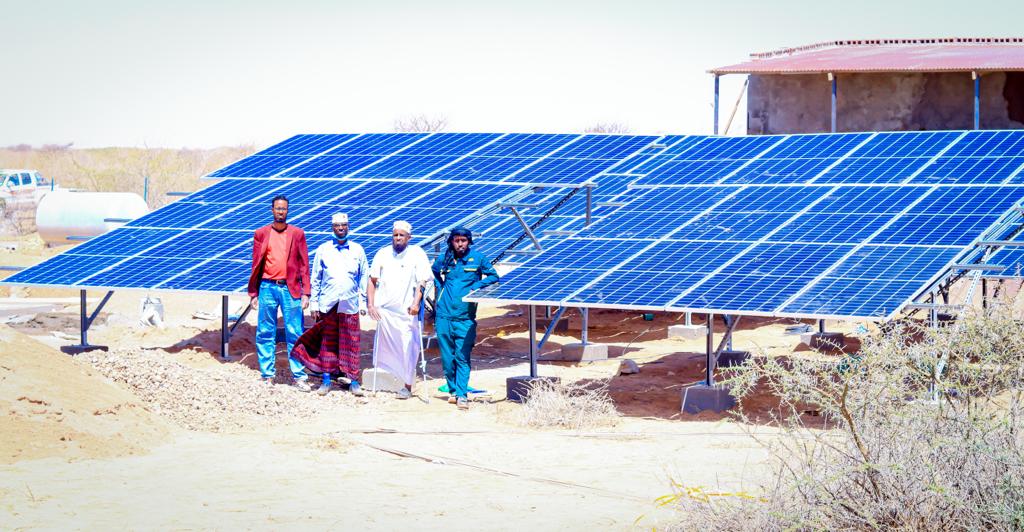
Water is life. But in many parts of the world — across Africa, the Middle East, Southeast Asia, and South America — access to reliable electricity for water pumping remains a challenge. Diesel generators are expensive to fuel and maintain. Grid power is often unavailable or unreliable. Solar energy, however, is abundant and free.
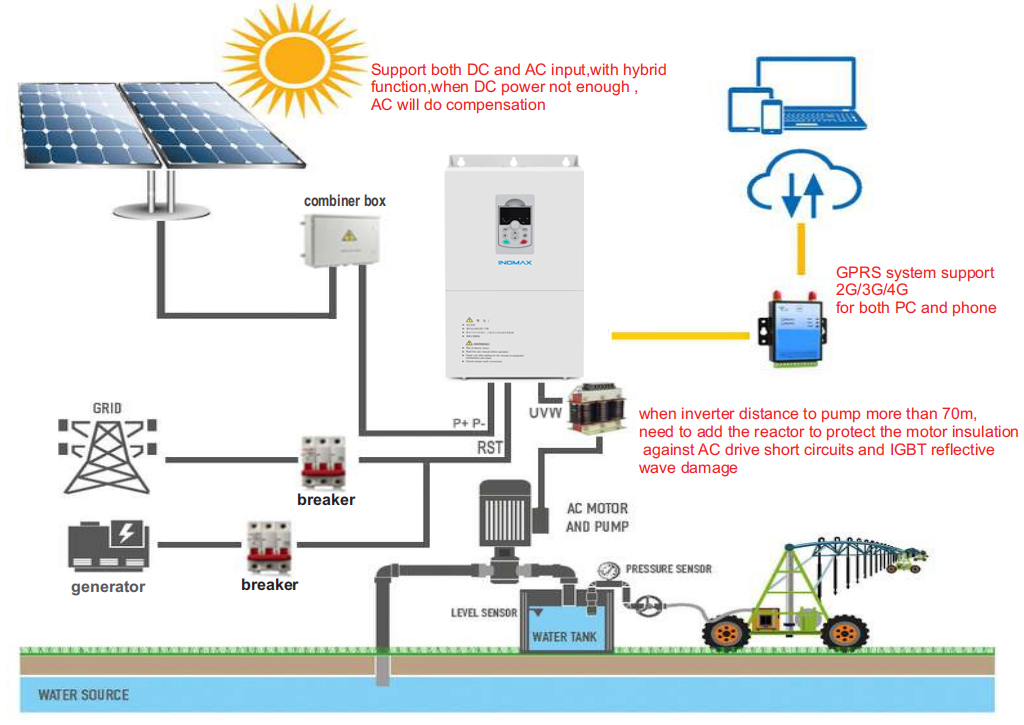
The INOMAX MAX500-PV is a dedicated solar pump inverter designed specifically for photovoltaic water pumping systems. Unlike standard VFDs that require complex configuration, the MAX500-PV is purpose‑built for solar applications — with auto MPPT (Maximum Power Point Tracking), dry run protection, tank full/well empty detection, and hybrid AC/DC input capability — all in a user‑friendly, rugged package.
Whether you are a pump manufacturer, solar system integrator, agricultural distributor, or irrigation project developer, the MAX500-PV delivers the reliability, efficiency, and ease of use that your customers demand — at a price that makes solar pumping accessible.
What makes MAX500-PV different from standard VFDs?
-
Auto MPPT >99% efficiency — no parameters to set; the inverter automatically tracks maximum solar power
-
Soft stop function — prevents water hammer when clouds pass, protecting pumps and pipes
-
Dry run protection — automatically stops the pump when the well runs dry
-
Tank full / well empty sensors — no parameter configuration required; plug‑and‑play
-
Hybrid AC/DC input — runs on solar DC priority, automatically switches to AC grid or generator when solar is insufficient
-
Wide DC input voltage range — 150V to 800V DC (customizable to 900V), compatible with most solar array configurations
-
Built for harsh environments — conformal coating, IP54 optional, wide temperature range
Why Solar Water Pumping?
| Benefit | Description |
|---|---|
| No fuel costs | Sunshine is free — after initial investment, operating costs are near zero |
| Low maintenance | No diesel engine oil changes, no spark plugs, no fuel filters |
| Remote operation | Ideal for off‑grid farms, remote villages, and desert wells |
| Environmentally friendly | Zero carbon emissions, no noise pollution |
| Government incentives | Many countries offer subsidies, tax breaks, or low‑interest loans for solar pumping |
| Reliable water supply | Pumps when the sun shines — which is when crops need water most |
MAX500-PV Technical Specifications
| Parameter | 220V Series | 380V Series |
|---|---|---|
| Maximum DC input voltage (Voc) | 800V (customizable to 900V) | 800V / 900V (customizable) |
| Minimum DC input voltage | 150V DC | 250V DC |
| Recommended MPPT voltage range | 170V – 660V | 250V – 660V |
| Recommended DC operating voltage | 330V – 750V | 540V – 750V |
| AC input voltage | 220V (±10%) | 380V (±10%) |
| AC input connection | Single phase | Three phase |
| Output AC voltage | 220V | 380V |
| Output connection | Single phase or three phase | Three phase |
| Power range | 0.75 kW – 7.5 kW | 0.75 kW – 250 kW |
| MPPT efficiency | >99% | >99% |
| Output frequency | 0 – 600 Hz (up to 3200 Hz optional) | 0 – 600 Hz (up to 3200 Hz optional) |
| Starting torque | 150% at 0.25 Hz | 150% at 0.25 Hz |
| Overload capacity | 150% for 60s (G‑type) / 110% for 60s (P‑type) | 150% for 60s (G‑type) / 110% for 60s (P‑type) |
| Operating temperature | -10°C to +50°C (derate above 40°C) | -10°C to +50°C (derate above 40°C) |
| Protection | IP20 standard, IP55 optional | IP20 standard, IP55 optional |
| Certifications | CE, RoHS | CE, RoHS |
Key Features & Benefits
1. True Auto MPPT (Maximum Power Point Tracking) — >99% Efficiency
The MAX500-PV continuously tracks the maximum power point of your solar panels, adjusting the pump speed to extract every available watt from the sun. Unlike some competitors that require manual parameter adjustment, our MPPT is fully automatic — no setup required. Just connect the solar panels and the inverter does the rest.
Why this matters for your customers:
-
More water pumped per day, especially during morning, evening, and cloudy conditions
-
Faster return on investment
-
Compatible with all standard solar panel configurations
2. Hybrid AC/DC Input — Solar Priority with Grid Backup
The MAX500-PV accepts both DC input from solar panels and AC input from the grid or generator. The inverter automatically prioritizes solar power — when DC power is sufficient, the pump runs on solar. When clouds pass or the sun sets, the inverter seamlessly compensates with AC power. This ensures 24/7 water supply without manual intervention.
Connection requirement: To enable hybrid mode, simply connect the X4 and COM terminals on the control board.
Typical applications:
-
Farms that need reliable water even during cloudy periods
-
Remote sites with unreliable grid power
-
Hybrid systems combining solar with diesel generator backup
3. Soft Stop — No Water Hammer, Longer Pump Life
When clouds pass and solar irradiance drops suddenly, many solar pump inverters stop abruptly, causing water hammer — a pressure surge that damages pipes, valves, and pumps. The MAX500-PV features a soft stop function: when DC power drops, the inverter gradually reduces pump speed before stopping. This protects your pump and piping system.
Competitor comparison: Many brands (including some major names) stop immediately when clouds pass, causing repeated water hammer events that shorten pump life.
4. Dry Run Protection — No Parameters Required
Running a pump dry destroys the pump seal and can burn out the motor. The MAX500-PV includes built‑in dry run protection that automatically stops the pump when the output current falls below the dry run threshold for 60 seconds. The inverter then waits 300 seconds and automatically restarts — no manual reset needed.
No parameter setting required — the protection works out of the box.
5. Tank Full & Well Empty Sensor Inputs — Plug & Play
The MAX500-PV has dedicated sensor inputs (X2 for tank full, X3 for well empty). Connect float switches or level sensors — when the tank is full, the inverter stops automatically. When the well is empty, the inverter stops and waits. When the sensor signals return to normal, the inverter restarts automatically after a 900‑second delay.
No parameter configuration needed — just connect the sensors and the inverter handles the logic.
6. Fault Alarms by Number — Simple Remote Support
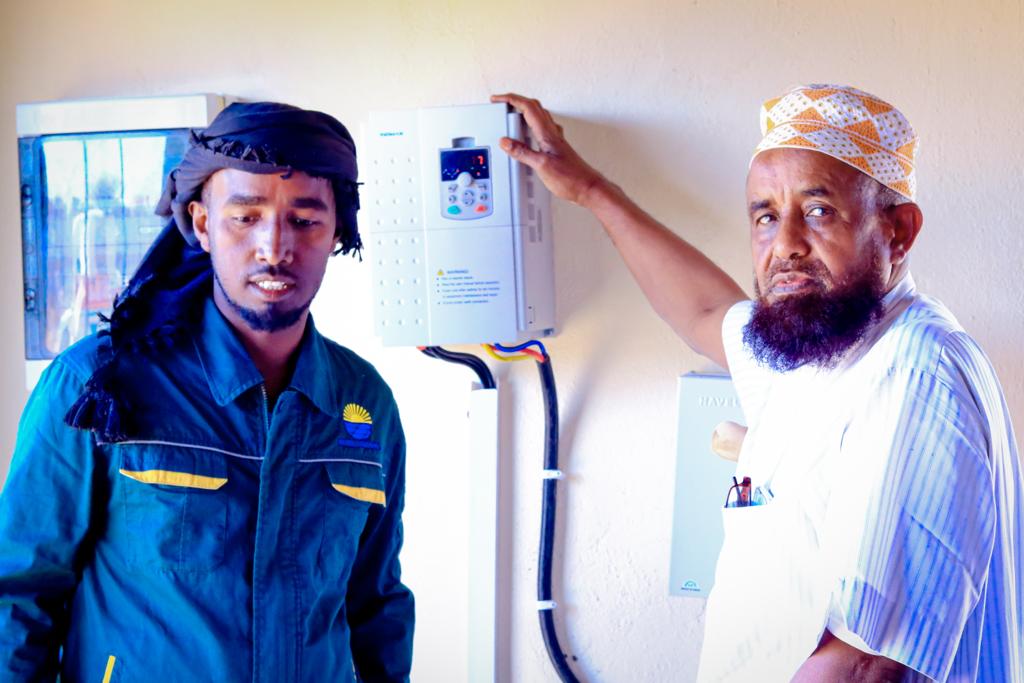
When a solar pump inverter fails in a remote village, the farmer or technician may not speak English or understand technical terms. The MAX500-PV displays fault codes as numbers (e.g., 111, 222, 333, 444, 555, 777, 888, 999, 994, SPO, OH2, E-CAN, ETH2, EEP). When a fault occurs, the user simply reads the number to you over the phone. You immediately know what happened and can guide them to a solution.
Competitor comparison: Some brands display fault messages in English letters — difficult for non‑English speakers to read or describe.
7. GPRS Remote Monitoring — Optional
For distributors and system integrators managing multiple installations, the MAX500-PV offers an optional GPRS monitoring module. Monitor water flow, pump status, solar voltage, and inverter operation from anywhere in the world via web or mobile app. Receive alerts when faults occur. Track historical data for maintenance planning.
8. Silicone Keypad with Jump Shift — Better User Experience
The MAX500-PV features a silicone rubber keypad — durable, water‑resistant, and comfortable to use in hot, dusty environments. The keypad includes a jump shift button for fast parameter navigation, saving time during installation and troubleshooting.
Competitor comparison: Many competitors use membrane switches that wear out quickly and lack jump shift functionality.
MAX500-PV Model Selection Table
| Model | Power (kW) | Recommended MPPT Voltage (VDC) | Output Current (A) | Output Voltage | Pump Power |
|---|---|---|---|---|---|
| MAX500-PV-10R7 | 0.75 | 300V-750V | 7A | 220V 1ph | 0.75 kW / 1 HP |
| MAX500-PV-11R5 | 1.5 | 300V-750V | 9A | 220V 3ph | 1.5 kW / 2 HP |
| MAX500-PV-1002 | 2.2 | 300V-750V | 14A | 220V 3ph | 2.2 kW / 3 HP |
| MAX500-PV-1004 | 4.0 | 300V-750V | 23A | 220V 3ph | 3.7 kW / 5 HP |
| MAX500-PV-1005 | 5.5 | 300V-750V | 32A | 220V 3ph | 5.5 kW / 7.5 HP |
| MAX500-PV-1007 | 7.5 | 300V-750V | 45A | 220V 3ph | 7.5 kW / 10 HP |
| MAX500-PV-4007 | 7.5 | 540V-850V | 18A | 380V 3ph | 7.5 kW / 10 HP |
| MAX500-PV-4011 | 11 | 540V-850V | 25A | 380V 3ph | 11 kW / 15 HP |
| MAX500-PV-4015 | 15 | 540V-850V | 32A | 380V 3ph | 15 kW / 20 HP |
| MAX500-PV-4018 | 18.5 | 540V-850V | 38A | 380V 3ph | 18.5 kW / 25 HP |
| MAX500-PV-4022 | 22 | 540V-850V | 45A | 380V 3ph | 22 kW / 30 HP |
| MAX500-PV-4030 | 30 | 540V-850V | 60A | 380V 3ph | 30 kW / 40 HP |
| MAX500-PV-4037 | 37 | 540V-850V | 75A | 380V 3ph | 37 kW / 50 HP |
| MAX500-PV-4045 | 45 | 540V-850V | 90A | 380V 3ph | 45 kW / 60 HP |
| MAX500-PV-4055 | 55 | 540V-850V | 110A | 380V 3ph | 55 kW / 75 HP |
| MAX500-PV-4075 | 75 | 540V-850V | 150A | 380V 3ph | 75 kW / 100 HP |
| MAX500-PV-4090 | 90 | 540V-850V | 176A | 380V 3ph | 90 kW / 125 HP |
| MAX500-PV-4110 | 110 | 540V-850V | 210A | 380V 3ph | 110 kW / 150 HP |
| MAX500-PV-4132 | 132 | 540V-850V | 250A | 380V 3ph | 132 kW / 175 HP |
| MAX500-PV-4160 | 160 | 540V-850V | 300A | 380V 3ph | 160 kW / 210 HP |
| MAX500-PV-4185 | 185 | 540V-850V | 340A | 380V 3ph | 185 kW / 250 HP |
| MAX500-PV-4200 | 200 | 540V-850V | 380A | 380V 3ph | 200 kW / 260 HP |
| MAX500-PV-4220 | 220 | 540V-850V | 420A | 380V 3ph | 220 kW / 300 HP |
| MAX500-PV-4250 | 250 | 540V-850V | 470A | 380V 3ph | 250 kW / 350 HP |
Configuration recommendation: Solar panel power should be 1.3 to 2.0 times pump power, depending on pump size and local sunlight conditions.
Protection Functions
| Alarm Code | Protection Function | Description |
|---|---|---|
| 111 | Minimum frequency protection | Output frequency below 35Hz for 60s → stop for 300s → auto restart |
| 222 | Dry running protection | Output current below P28.13 for 60s → stop for 300s → auto restart |
| 333 | Low DC voltage | DC voltage below 170V (220V system) or 270V (380V system) → stop |
| 444 | Over voltage | DC voltage above 800V / 900V → stop |
| 555 | Tank full | Float switch at high position → stop → auto restart after 900s when sensor clears |
| 777 | Well empty | Float switch at low position → stop → auto restart after 900s when sensor clears |
| 888 | Over current | Output current too high → stop (protects pump) |
| 999 | Over power | Output power too high → stop (protects pump) |
| 994 | Inverter overload | Overload condition → check motor load |
| SPO | Output phase loss | Check pump wiring for loose connections or pump failure |
| OH2 | Over temperature | Inverter overheating → improve ventilation or add cooling fan |
| E-CAN | Control board fault | Replace control board |
| ETH2 | Ground short circuit | Check motor wiring insulation |
| EEP | EEPROM fault | Replace main control board |
Parameter Settings (Quick Reference)
The MAX500-PV is designed to be user‑friendly with minimal parameter adjustment required for basic operation. Key parameters are concentrated in group P28.
| Parameter | Name | Description | Default |
|---|---|---|---|
| P28.01 | Run command | 0: Keypad; 1: Auto start on power‑on; 2: Terminal control | 1 |
| P28.02 | Running model | 0: MPPT; 1: Fixed voltage; 2: Hybrid mode (with optional accessory); 3: Hybrid mode 2 | 0 |
| P28.03 | Waiting time in automatic model | Delay before auto start after power‑on (0-1800s) | 0 |
| P28.04 | Maximum output frequency | 0-70 Hz (or up to 600 Hz for high‑speed pumps) | 50 |
| P28.05 | Minimum output frequency | Sets low frequency threshold for protection | 1 |
| P28.06 | Delay time of minimum frequency | Time at minimum frequency before alarm | 60s |
| P28.07 | Restart time after minimum frequency | Wait time before restart after min frequency alarm | 300s |
| P28.08 | Automatic alarm signal reset time interval | Auto reset delay for most faults | 300s |
| P28.10 | Minimum DC voltage | Low voltage protection threshold | 170/270V |
| P28.11 | Maximum DC voltage | Over voltage protection threshold | 800V |
| P28.12 | Dry running protection | 0: Disable; 1: Enable | 1 |
| P28.13 | Current of dry running | Current threshold for dry run detection | (depends on motor) |
| P28.14 | Protection time of dry running | Time at low current before dry run alarm | 60s |
| P28.15 | Interval time of dry running restart | Wait time before restart after dry run | 300s |
| P28.30 | Delay time of full water level signal | Delay before tank full alarm (5s default) | 5s |
| P28.31 | Restart time after 555 alarm | Wait time after tank full clears before restart | 900s |
| P28.32 | Delay time of low water level signal | Delay before well empty alarm (5s default) | 5s |
| P28.33 | Restart time after 777 alarm | Wait time after well empty clears before restart | 900s |
Wiring Guide
Main Circuit Terminals
| Terminal | Function |
|---|---|
| R, S, T | AC input (grid or generator) |
| +, – | DC input (solar panels) — note polarity |
| U, V, W | Output to 3‑phase pump motor |
| L, N | AC input for single‑phase models |
| PE | Ground terminal |
Control Board Terminals
| Terminal | Function |
|---|---|
| X1 | Run command (when P28.01=2, connect X1 to COM to run) |
| X2 | Tank full sensor (connect to COM for full water signal) |
| X3 | Well empty sensor (connect to COM for empty water signal) |
| X4 | Hybrid mode enable (connect X4 to COM when AC power is available) |
| COM | Common terminal for all sensor inputs |
| TA, TB, TC | Fault alarm relay output (green running light, red alarm light) |
Application Examples
1. Agricultural Irrigation — Submersible Pump in Deep Well
Location: Rural farm, no grid connection
Pump: 15 kW submersible pump, 80m depth
Solar array: 22 kWp solar panels
Solution: MAX500-PV-4015 running in pure solar mode (P28.02=0). Auto MPPT tracks maximum power from sunrise to sunset. Dry run protection prevents pump damage when well level drops. GPRS module enables remote monitoring of water flow and system status.
Results:
-
12,000 liters of water pumped per sunny day
-
Zero diesel consumption — fuel savings of $8,000/year
-
Payback period: 18 months
2. Livestock Watering — Hybrid Solar/Grid System
Location: Ranch with unreliable grid power
Pump: 7.5 kW centrifugal pump for trough filling
Solution: MAX500-PV-4007 with hybrid mode enabled (P28.02=2, X4 connected). Solar powers the pump during the day; when solar is insufficient, the inverter automatically draws AC power from the grid.
Results:
-
70% of water pumped from solar energy
-
Grid power only used during cloudy periods and at night
-
Reliable 24/7 water supply for 500 head of cattle
3. Community Water Supply — Solar with Generator Backup
Location: Remote village in Africa
Pump: 30 kW borehole pump
Solution: MAX500-PV-4030 with AC input from diesel generator. The inverter runs on solar during daylight hours. When water demand exceeds solar capacity, the generator starts automatically (external controller) and the inverter switches to AC input.
Results:
-
Diesel consumption reduced by 85%
-
Clean drinking water for 2,000 villagers
-
System funded by international development grant
4. Greenhouse Drip Irrigation — Small Solar Pump
Location: Small farm in Southeast Asia
Pump: 1.5 kW surface pump
Solution: MAX500-PV-11R5 connected to 2.2 kW solar array. The inverter automatically starts when the sun rises and stops at sunset. Tank full sensor prevents overfilling of storage tank.
Results:
-
Farmer no longer pays for grid electricity
-
Consistent water pressure for drip irrigation
-
Simple operation — farmer only needs to keep panels clean
Comparison with Other Solar Pump Inverters
| Feature | INOMAX MAX500-PV | Competitor A (VEICHI SI23) | Competitor B (INVT GD100-PV) | Competitor C (ABB ACS355) |
|---|---|---|---|---|
| Max DC input (Voc) | 800V (900V custom) | 450V (220V) / 800V (380V) | 450V (220V) / 800V (380V) | Not solar‑dedicated |
| MPPT efficiency | >99% auto | >99% | >99% | Not dedicated |
| Starting torque | 150% at 0.25 Hz | 150% at 0.5 Hz | 150% at 0.5 Hz | 150% at 0.5 Hz |
| Stop method | Soft stop (no water hammer) | Abrupt stop (water hammer risk) | Abrupt stop (water hammer risk) | — |
| Sensor inputs | Plug & play (no parameters) | Parameters required | Parameters required | Parameters required |
| Fault display | Numbers (easy remote support) | Letters | Letters | Letters |
| Keypad | Silicone + jump shift | Membrane, no jump shift | Membrane, no jump shift | Membrane |
| Hybrid AC/DC | Yes (X4 terminal) | Yes | Yes | No |
| GPRS monitoring | Optional | Optional | Optional | No |
| Power range | 0.75 – 250 kW | Smaller range | Smaller range | 0.37 – 22 kW only |
Frequently Asked Questions
Q1: What size solar array do I need for my pump?
As a general rule: solar panel power should be 1.3 to 2.0 times the pump power. For a 4 kW pump, we recommend 5.2 kW to 8 kW of solar panels. For pumps below 4 kW, use the higher ratio (2.0×). For larger pumps (above 22 kW), the ratio can be lower (1.3×). Contact our technical team for a precise sizing recommendation based on your location and water depth.
Q2: Can I run the pump directly from solar panels without batteries?
Yes. The MAX500-PV is designed for direct solar pumping without batteries. The inverter draws power directly from the solar panels and drives the pump. When solar power is insufficient, the pump slows down or stops. When the sun returns, the pump restarts automatically. No batteries are required — saving significant cost.
Q3: How does the inverter handle passing clouds?
When a cloud passes, solar irradiance drops suddenly. The MAX500-PV performs a soft stop — gradually reducing pump speed. When the sun returns, the inverter automatically restarts the pump. This soft stop prevents water hammer, which can damage pipes and pumps. Many competitor inverters stop abruptly, causing repeated mechanical shock to the pumping system.
Q4: Can I use the MAX500-PV with an existing AC pump?
Yes. The MAX500-PV is compatible with standard AC induction pumps (single phase or three phase, depending on model). Simply connect the pump to the U, V, W output terminals. For three‑phase pumps, you need a 380V model. For single‑phase pumps up to 2.2 kW, you can use a 220V single‑phase output model.
Q5: What happens when the well runs dry?
The MAX500-PV includes dry run protection. When the inverter detects that the output current has dropped below the dry run threshold for 60 seconds (indicating the pump is running without water), it stops the pump and displays fault code 222. After 300 seconds, it automatically attempts to restart. If the well has recovered, the pump resumes normal operation. If not, it stops again and continues the cycle.
Q6: Do I need to set parameters for tank full and well empty sensors?
No. The MAX500-PV is designed for plug‑and‑play operation. Connect a float switch to X2 (tank full) — when the switch closes, the inverter stops and displays 555. When the switch opens, the inverter waits 900 seconds and restarts. Connect a float switch to X3 (well empty) — when the switch closes, the inverter stops and displays 777. When the switch opens, it waits 900 seconds and restarts. No parameter configuration is required.
Q7: What is the maximum DC input voltage?
For standard 380V models, the maximum Voc is 800V. For 220V models, the maximum Voc is also 800V. We can customize units with 900V maximum Voc for larger solar arrays — please contact us for custom orders.
Q8: Can I use the inverter with a permanent magnet pump motor?
Yes. The MAX500-PV supports both asynchronous (induction) motors and permanent magnet synchronous motors (PMSM). For PMSM, additional parameter settings may be required — please refer to the full user manual or contact our technical support.
Q9: How do I enable hybrid mode (solar + grid)?
To enable hybrid mode, set P28.02 = 2 (or 3 for the other hybrid option). Then physically connect the X4 and COM terminals on the control board. When DC power from solar panels is sufficient, the inverter runs on solar. When DC power drops below the minimum operating voltage, the inverter automatically switches to AC input power (connected to R, S, T terminals). This ensures continuous water supply.
Q10: What is the warranty period?
Standard warranty is 18 months from date of manufacture or 12 months from commissioning, whichever comes first. Extended warranty options are available for distributor partners.
Q11: Can I monitor multiple solar pump installations remotely?
Yes. Our optional GPRS monitoring module allows you to monitor water flow, pump speed, solar voltage, output current, and fault status from any web browser or mobile app. This is ideal for distributors, system integrators, and NGOs managing multiple installations across different locations.
Q12: What pump types are compatible?
The MAX500-PV works with:
-
Submersible pumps (borehole pumps, deep well pumps)
-
Surface centrifugal pumps
-
Booster pumps
-
Circulation pumps
-
Irrigation pumps
-
Pool pumps
-
Industrial process pumps
Compatible with both single‑phase and three‑phase pumps (select correct model).
Q13: How does the inverter protect against lightning strikes?
The MAX500-PV includes built‑in surge protection circuitry. For installations in areas with high lightning risk, we recommend additional external lightning arrestors on the DC input side. Please consult local electrical codes for requirements.
Q14: Can I use the inverter for a floating pump on a pond or lake?
Yes. The MAX500-PV works with any standard AC pump. For floating applications, ensure the pump and cables are properly waterproofed. The inverter itself should be installed in a dry, protected location.
Q15: How do I get technical support for my MAX500-PV installation?
Contact your local distributor or contact Inomax directly. When calling, please have your inverter model number and the fault code (if any) ready. For remote support, our GPRS module allows our technicians to log into your system and diagnose issues remotely.
Ordering Information
| Model Code | Description |
|---|---|
| MAX500-PV-1XXX | 220V single‑phase input, single‑phase output (0.75 – 5.5 kW) |
| MAX500-PV-2XXX | 220V single‑phase input, three‑phase output (0.75 – 7.5 kW) |
| MAX500-PV-3XXX | 220V three‑phase input, three‑phase output (0.75 – 7.5 kW) |
| MAX500-PV-4XXX | 380V three‑phase input, three‑phase output (0.75 – 250 kW) |
Example: MAX500-PV-4015 = 380V, three‑phase, 15 kW solar pump inverter
Optional accessories:
-
GPRS remote monitoring module
-
IP55 outdoor enclosure
-
Output reactor (for long cable runs >70m)
-
Braking resistor (for applications requiring rapid stopping)
-
External EMC filter
Why Choose INOMAX for Solar Pumping?
| Advantage | Benefit |
|---|---|
| Dedicated solar pump design | Not a modified general VFD — purpose‑built for solar with auto MPPT, dry run, soft stop |
| Auto MPPT >99% | No parameters to set — just connect panels and pump |
| Soft stop prevents water hammer | Longer pump life, fewer pipe repairs |
| Plug & play sensor inputs | No parameter configuration required for tank full / well empty |
| Numbered fault codes | Easy remote support — user reads the number, you know the problem |
| Wide DC voltage range | Compatible with more solar array configurations — up to 800V (900V custom) |
| Hybrid AC/DC input | Solar priority with grid or generator backup — 24/7 water supply |
| Rugged design | Conformal coating, silicone keypad, wide temperature range |
| Global project experience | Thousands of units installed across Africa, Middle East, Southeast Asia, South America |
| Distributor friendly | Competitive pricing, stock availability, technical support, marketing materials |
Ready to Bring Solar Water Pumping to Your Market?
Whether you are a pump manufacturer looking for a reliable solar drive partner, a distributor building your solar pumping product line, or an agricultural project developer, the INOMAX MAX500-PV is the smart, simple, and cost‑effective choice.
Contact us today for:
-
Distributor pricing and terms
-
Custom voltage and power configurations
-
Technical training for your team
-
Project-specific sizing assistance
Inomax Technology